Showing posts with label Emergency Tree Removal Marietta Ga. Show all posts

Thursday, April 13, 2023

How to Tell if a Tree Is Dying

Signs of a dying tree include loss of foliage and dieback

Need help figuring out if your tree is dying and what to do about it? Recognizing the signs of a dying tree will help you get professional help to save or remove it before it falls, causing catastrophic damage or harm.

toddsmariettatreeservices.com gathered the following information and signs of a troubled or dying tree and what you can do to help or remove it.

What Causes a Tree to Die

While trees may appear impervious to severe weather and their surroundings, there are several factors that can cause a tree’s decline and death. These factors include death from the following:

  • Its environment
  • Drought
  • Harmful insects and diseases
  • A catastrophic event or impact
  • A lightning strike
  • Severe weather events (causing blowdown, windthrow, or windsnap)
  • Age-related collapse (starvation)
  • Timber harvesting
Signs of a dying tree include brittle branches and twigs

Note: Sudden tree death can occur from Armillaria root rot, fatal fungal diseases, or drought.

Signs of a Dying Tree

Property owners often see a concerning tree and wonder is my tree dying? Some fail to follow through when they disregard the warning signs. You can prevent catastrophic damages by learning the signs of a dying tree and how to respond to them. These are the most obvious warning signs that a tree is dying:

1. Leaning Tree – Leaning trees may signal damaged or dying roots, structural imbalance, or failure of soil structure. When a tree is leaning more than 15 degrees, this is typically a result of wind (storm) or root damage and is unlikely to recover.

Recommendation: Hire a professional tree service to evaluate the tree’s condition. Leaning trees can sometimes be preserved by cabling or bracing them. However, most leaning trees must be removed.

2. Root Damage – Construction, digging, trenching, and landscaping projects often disrupt or compact the soil around a tree, causing distress or root death. Severe damage can also occur from lawnmowers or weed eaters if you get too close to the trunk or roots.

Recommendation: Consider the following preventive measures:

  • Protect the soil (and roots) within the tree’s drip line by applying a 2 to 3-inch layer of organic mulch.
  • Prevent foot, vehicle, and equipment traffic beneath the tree.
  • Keep digging and trenching activities from disturbing or severing roots.
  • Never allow equipment or material storage under a tree.

Note: If roots have been damaged or severed, have the tree inspected to determine restorative measures or removal.

3. Bark is peeling or falling off – Diseases like hypoxylon canker and boring insects can cause sufficient damage in a tree’s cambium layer to cause its bark to fall off. These pests are opportunistic, typically attacking already distressed trees.

Recommendation: Have a professional tree service inspect the tree to determine what is happening to the tree, how to prevent nearby trees from being infected, and if the tree should be removed.

4. Mushrooms Growing on Trunk or Roots – When mushrooms grow from a tree trunk or roots there is typically extensive decay occurring in its heartwood. Mushrooms are the fruiting structure of most fungi and should be addressed soon as they are seen around a tree trunk or roots.

Signs of a dying tree include mushroom growth on the trunk and roots

Recommendation: When caught early, you can save the tree by pruning infected limbs. You can also apply fungicides if the disease hasn’t spread. However, prevention is the best solution. Proper watering, sunlight, mulching, fertilizing, and fungicide applications can help prevent fungal infections.

Note: When mushrooms appear on a tree, it is often too late to save the tree. Seek immediate professional help.

5. Brittle and Fallen Branches – Frequently seeing sticks or twigs on the ground and brittle or weak tree branches may be a sign of diseased or dead branches, which could signal the majority of the tree is already dead. This symptom may be caused by drought stress, over-fertilization, pest infestations, or disease.

Recommendation: Have your tree evaluated ASAP. With professional help, you might save your tree.

6. Oddly-Shaped or Chlorotic Foliage – Oddly-shaped or discolored tree leaves typically represents a soil or root problem. It may signal severe root rot or be an insect infestation.

Recommendation: Ensure your soil isn’t mismatched with your tree (nutrients, pH, etc.) by testing the soil (contact an arborist or local university extension). If it’s not a soil issue, consult a tree professional for a proper evaluation and diagnosis.

Learning to Identify Dying Trees

In this article, you discovered how to recognize the signs of a dying tree, when to remove it, and what actions to take to save it or prevent further decline.

Knowing how to identify a dying tree will help you take prompt action to either save or remove it.

Failure to recognize when a tree is troubled or dying will leave your property and well-being at risk if the tree starts shedding limbs, collapses, or falls.

Sources:
extension.uga.edu/publications/detail.html?number=C1100
extension.tennessee.edu/publications/Documents/SP686.pdf
tfsweb.tamu.edu/EffectsOfDroughtOnTrees
extension.missouri.edu/publications/g5200

Todd’s Marietta Tree Services

Marietta, GA
(678) 505-0266

Originally published on: https://www.toddsmariettatreeservices.com/how-to-tell-if-a-tree-is-dying/

Thursday, March 16, 2023

Choosing a 7B Landscape Tree for Your Marietta Yard

Marietta ga landscape trees include zone 7b hardy species

Need help selecting the best tree for your Hardiness zone 7b yard? Understanding different tree species’ characteristics and growing habits will help you plant a tree that fits perfectly in your yard.

toddsmariettatreeservices.com gathered the following tree species and growing information for zone 7b landscape trees.

What is a Landscaping Tree?

Landscaping trees are planted to create diversity and serve one of many purposes on your property. These trees come in all shapes and sizes and can be among the most significant assets to your yard by providing shade, privacy screens, wind protection, wildlife refuge, visual interest (curb appeal), and other uses.

What are the Benefits of Landscape Trees?

Landscape trees reduce air pollution and noise pollution. They also filter water and absorb rainfall, lessening the impact of flood and stormwater and preventing soil erosion. Trees also attract a variety of birds and natural wildlife, providing food and shelter.

Note: A large, healthy tree can absorb approximately 40,000 gallons of groundwater annually, returning it to the atmosphere through evapotranspiration.

What are the Best Trees for Your Front Yard?

Marietta ga landscape trees include lagerstroemias

Flowers add pops of color, and mulch creates a clean, well-manicured look. With trees, you can balance height and width in your landscape. Trees are among the best ways to draw the eye, add height, and create a relaxing balance. Curb appeal helps sell a home (trees significantly contribute to curb appeal), and here are a few of the best front yard trees:

  • Crepe Myrtle (Lagerstroemia) reaches 15 feet
  • Blue Spruce (Picea pungens) reaches 75 feet
  • Cherry (Prunus avium) reaches 25 to 30 feet
  • River Birch (Betula nigra) reaches 60 to 70 feet
  • Magnolia (Magnolia) reaches 70 to 80 feet

Tip: Avoid catastrophic structural damages by planting your trees at a safe distance from structures on your landscape.

What are the Most Low-Maintenance Landscape Trees?

Marietta ga landscape trees include japanese maples

Once you have determined your tree’s purpose in your landscape (flowers, evergreen shade, privacy, etc.), you should consider the tree’s maintenance. Some landscape plants drop fruit and nuts, while others grow with invasive or surface roots, disturbing your yard, driveway, and foundation. Consider the following low-maintenance landscape trees:

  • Japanese Maple (Acer palmatum) reaches 25 to 35 feet with delicate branches and vibrant foliage
  • Jacaranda (Jacaranda) reaches 25 to 40 feet with striking blue and lavender flowers
  • Redbud (Cercis) reaches 10 to 20 feet with deep red, bright yellow, or two-colored foliage
  • Frangipani (Plumeria) reaches 20 to 25 feet with non-invasive roots and an abundance of beautiful flowers
  • Cherry Plum (Prunus cerasifera) reaches 25 feet with deep purple foliage and pink/white flowers

Tip: All tree species require seasonal pruning and thorough inspection after severe weather.

What are the Best Trees to Plant Near a House?

Marietta ga landscape trees include weeping willows

Smaller trees with shallow or non-invasive roots pose little or no risk to your home. Consider the following low-risk tree species:

  • Weeping Willow (Salix babylonica) reaches 30 to 40 feet
  • Paper Birch (Betula papyrifera) reaches 50 to 70 feet
  • Silver Maple (Acer saccharinum) reaches 50 to 80 feet
  • Sweetgum (Liquidambar) reaches 60 to 75 feet
  • Crabapple (Malus) reaches 15 to 20 feet

Tip: Towering tree species like southern pines and eucalyptus should be given extra space and not planted within 40 to 50 feet of landscape structures.

Why do Landscape Designers Prefer Male Trees?

Trees with male reproductive organs are preferred in landscapes because they don’t drop messy seed pods or fruit. However, they do produce and release pollen.

Note: When female trees, which capture pollen, are absent from significant landscape areas, the entire area can be blanketed by mass amounts of pollen.

What is the Best Pine Tree to Plant in Zone 7b?

Marietta ga landscape trees include lodgepole pines


Pine trees are often used in landscapes as privacy screens and specimen trees because they are fast-growing, shapely, and evergreen. Consider the following pine tree species for your landscape needs:

  • Loblolly Pine (Pinus taeda) reaches 60 to 90 feet
  • Austrian or Black Pine (Pinus nigra) reaches 50 to 60 feet and requires ample space to flourish
  • Lodgepole Pine (Pinus contorta) reaches 70 to 80 feet
  • Red Pine (Pinus resinosa) reaches 50 to 80 feet
  • Eastern White Pine (Pinus strobus) reaches 50 to 80 feet

Tip: Avoid planting pines near driveways and carports (overhanging branches can leave your vehicle or structure riddled with sap droppings). Pine trees produce and drip sap. The sap flow is heaviest in spring and early summer. During winter, sap slows down and picks up again as spring approaches.


Marietta Georgia Zone 7b Landscape Trees

In this article, you discovered species information and growing characteristics for several popular zone 7b landscape trees.

Knowing which trees to plant around your home and landscape will help you create a beautiful yard with purpose and elevated curb appeal.

Planting the wrong tree species in the wrong location can result in catastrophic root damage to your landscape, driveway, pathway, foundation, and home if it falls on your roof.

Sources:
usgs.gov/special-topics/water-science-school/science/evapotranspiration-and-water-cycle#overview
extension.tennessee.edu/publications/Documents/SP517.pdf
extension.uga.edu/publications/detail.html?number=b625#title11
uaex.uada.edu/publications/pdf/FSA-6126.pdf

Todd’s Marietta Tree Services

Marietta, GA
(678) 505-0266

Originally published on: https://www.toddsmariettatreeservices.com/choosing-a-7b-landscape-tree-for-your-marietta-yard/

Tuesday, February 21, 2023

Twisty Trees for Your Landscape Specimen

Twisty trees include species with spiral or twisted patterns

Need help deciding which trees with twisted trunks and branches to use as a specimen on your landscape? Knowing which tree species grow in a twisted form will help you determine which one to plant as a centerpiece on your beautiful landscape.

toddsmariettatreeservices.com gathered the following species and growing information for naturally twisty trees to consider for your landscape’s specimen tree.

What Causes a Twisted Tree?

Spiral or twisted patterns are clever tree survival adaptations. Since the bark and wood of trees do not grow in unison, the spiral pattern beneath the bark may not be evident until the bark drops from the tree.

Tree wood cells that must support heavy loads of massive branches and a dense crown, growing in an excessively windy location, or grow on unusually uneven land, like shore pines that grow in windy and sandy areas, can grow in a twisted pattern to provide more strength to the tree and its branches.

Environmental factors like prevailing winds, compromised roots, and physical barriers can cause trees to twist and adapt. A spiral wood grain efficiently and evenly delivers water and nutrients throughout the tree when straight grain wouldn’t be sufficient. Other common theories include the following:

  • Tree genetics
  • Heliotropism (tracking the sun)
  • The Coriolis Effect (causing the clockwise wind pattern and ocean current in the northern hemisphere)

Regardless of why they twist, they are a sight to behold as they mature. Consider the following twisty tree species for your landscape needs:

Jack Pine (Pinus banksiana)

Twisted trees include jack pine

Jack pine needles typically grow in bundles of two, the tree’s cones are tightly wrapped and slightly curved, while the tree’s bark is thin and flaky on younger trees, maturing into thicker plates as they age. This species has crooked branching and trunk development when grown in open landscapes (rather than forested or crowded situations), giving it an oversized bonsai appearance.

USDA Hardiness Zones – 2 through 6
Mature Size – This tree reaches 40 to 50 feet with a spread of 15 to 20 feet
Lifespan – 80 to 100+ years

Scotch Pine (Pinus sylvestris)

Twisted trees include scotch pine

The Scotch pine is a fast-growing, medium-sized evergreen conifer that typically grows with a conical to columnar (often irregular and contorted) habit and then develops an open, rounded irregular, or gnarled crown as it ages. Cones are small and rounded, while needles typically grow in twisted bunches of two.

USDA Hardiness Zones – 3 through 7
Mature Size – This tree reaches 30 to 60 feet with a spread of 30 to 40 feet
Lifespan – 150 to 300 years

Japanese Black Pine (Pinus thunbergii)

Twisted trees include japanese black pine

The Japanese black pine is an attractive evergreen conifer tree with a typically flat-topped pyramidal form with no prominent central leader. As this species ages, it grows irregular and asymmetrical, with drooping branches. The tree is noted for its shrubby habit and curved trunk.

USDA Hardiness Zones – 5 through 9
Mature Size – This tree reaches 20 to 60 feet with a spread of 10 to 20 feet
Lifespan – 15 to 20 years

Cork Oak (Quercus suber)

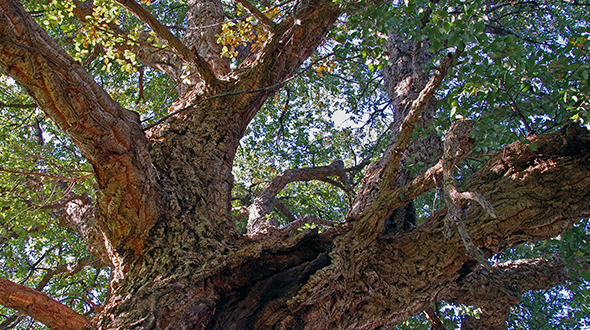
Twisted trees include cork oak

Unlike other oak trees, cork oak is a vibrant evergreen. The thick, gnarled dark grey bark is the portion known as “cork.” This tree can form a twisted trunk with sprawling branches.

USDA Hardiness Zones – 7 through 9
Mature Size – This tree reaches 30 to 65 feet with an equally sized spread
Lifespan – Over 200 years

Overcup Oak (Quercus lyrata)

Twisted trees include overcup oak

Overcup oak is a medium-sized tree with an irregular crown and twisted branches. Native to North American east coastal plains, this tree’s often twisted growth reduces its value as a timber tree.

USDA Hardiness Zones – 5 through 9
Mature Size – This tree reaches 45 to 70 feet with a spread of 35 to 50 feet
Lifespan – 80 to 100+ years

Willow (Peppermint) Myrtle (Agonis flexuosa)

Twisted trees include willow myrtle

This species resembles a weeping willow (Salix babylonica) tree from a distance due to its long, drooping leaves. It is distinctive because of its powerful peppermint fragrance. This tree produces clusters of small white flowers, and its weeping branches partially conceal its twisted trunk.

USDA Hardiness Zones – 8b through 11
Mature Size – This tree reaches 10 to 15 feet with a spread of 8 to 10 feet
Lifespan – 50 to 80 years

Twisted Acacia (Acacia schaffneri)

Twisted trees include twisted acacia

Twisted Acacia is a spiny, spreading, multi-stemmed large shrub or small tree. The stems have many paired, pin-like spines and are pale to blackish. When young, a twisted Acacia needs aggressive pruning to maximize its gnarled trunk and branch growth.

USDA Hardiness Zones – 9 through 11
Mature Size – This tree reaches 20 to 25 feet with a spread of 25 to 30 feet
Lifespan – 30 years

Trees With Twisted Trunks

Some trees have a tendency for a “pronounced” twisted appearance where the trunk deviates from the species’ typical straight growth. Planting a tree that exhibits twisted trunk or branch growth adds curiosity and interest to a landscape and serves as a focal point or specimen tree. When choosing a tree species, select one that has this tendency. It is not guaranteed that an individual young tree will develop pronounced twists, but the result is worth the gamble.

Twisty Trees

In this article, you discovered species and growing information about several trees that grow with twisted trunks, branches, or both.

Knowing which tree species have twisting growth patterns will help you decide which to use as your landscape’s specimen tree.

Lack of info about twisted tree species may cause you to plant the wrong tree.

Sources:
wta.org/news/signpost/why-do-trees-grow-in-spirals
savetheredwoods.org/blog/forest/why-so-some-trees-grow-in-spirals/
nfs.unl.edu/woody-plants/jack-pine
plants.ces.ncsu.edu/plants/pinus-sylvestris/
uaex.uada.edu/yard-garden/resource-library/plant-week/Pinus-thunbergii-Japanese-Black-Pine-12-21-2017.aspx
sites.redlands.edu/trees/species-accounts/cork-oak/
rangeplants.tamu.edu/plant/twisted-acacia-huisachillo/
selectree.calpoly.edu/tree-detail/agonis-flexuosa

Todd’s Marietta Tree Services
Marietta, GA (678) 505-0266


Originally published on: https://www.toddsmariettatreeservices.com/twisty-trees-for-your-landscape-specimen/

Friday, January 13, 2023

Top 5 Landscape Features for Marietta GA Yards

Creating a stunning landscape includes incorporating multiple features

Planning and looking for the best features to enhance your Marietta, Ga landscape? Understanding which landscape features work well together will help you design a yard that can significantly increase your home’s curb appeal and value.

toddsmariettatreeservices.com gathered the following landscape design principles and features to help you create a stunning Marietta, Georgia, yard.

Landscape Design Principles

The following landscape design principles have been utilized by designers for centuries in all art forms, like painting, construction, landscape design, etc. Consider the following design principles when developing your Marietta, Georgia, front yard landscape concept:

BalanceSymmetrical balance is used in formal landscapes, in which each side mirrors the other. Asymmetrical balance, or informal balance, differs on either side and appears relaxing and free-flowing.

Focal Point – A landscape’s focal point is often a feature close to the front door to enhance the home’s entrance.

Proportion – Landscape design proportion considers building size, yard size, tree, shrub, plant size, and planted areas vs. open space.

Simplicity – Avoid a cluttered landscape by using too many (or clashing) colors, shapes, curves, and textures.

Rhythm – A rhythm is established when landscape features are repeated with standard intervals. Trees, plants, shrubs, stones, benches, or other elements can be repeated within the design to create rhythm.

The colors, shapes, sizes, textures, and other landscape features can easily create a beautifully unified front yard space.

Popular Landscape Features

Front yard landscaping design and its features define your home’s exterior. Your front yard is the most seen part of the property, greeting your guests and visitors before reaching the door and setting the tone for the rest of the house. Consider the following popular landscape features:

1. Front Yard Garden Space

Creating a stunning landscape includes planting a garden

Well-designed, multi-level garden areas showcase your gardening prowess with color, and variety, and when used as borders, can highlight other landscape features, like a pathway, driveway, specimen tree, pond, etc.

Tip: Reduce watering and care requirements by planting native plant species.

2. Landscape Lighting

Creating a stunning landscape includes installing lighting

Landscape lighting improves your home’s safety and security. Well-placed landscape lighting can enhance trees, gardens, and other features in your yard while illuminating a hard-to-see walkway, driveway, or raised steps.

Read more about landscape lighting and its ideal palcement at toddsmariettatreeservices.com/where-to-place-landscape-lighting

3. Front Yard Water Feature

Creating a stunning landscape includes installing water features

Besides creating a focal point, a water feature provides individuality to your landscape. This occurs through the feature’s size, shape, color, design, and placement. Water features give movement to an otherwise still area with rushing water.

Note: Your fountain will attract birds, butterflies, and wildlife to your front yard.

4. Landscape Trees

Creating a stunning landscape includes using trees for specimens or privacy

Specimen trees are excellent front yard focal points while providing shade, offering leafy screens, or framing a picturesque view. A large specimen tree in a vast landscape can add structure and shape to the space.

Using trees for privacy screens helps seclude you from your neighbors’ wandering eyes while providing a lush, green landscape year-round (evergreen species), shielding your property from wind, and creating a beautifully shaded scenery.

Tip: Hire a professional tree service to provide seasonal pruning and care.

5. Front Yard Walkway

Creating a stunning landscape includes installing a walkway

Installing a stone, brick, concrete, gravel, or paved walkway gives guests and visitors a sense of invitation. It simplifies getting to your front door (or other destination), which naturally increases your property’s curb appeal.

You can add visual value to your front yard walkway by bordering it with flowering plants, shrubs, and lighting.

Tip: When installing a walkway, consider applying a slip-resistant surface to avoid slips and injuries during watering cycles and wet weather.

Visualize Your Landscape Design

You can sketch your front yard landscape design by drawing the yard’s outline, penciling in any existing features, then adding any rocks, waterways, structures, slopes, etc. Consider the following app to help you formulate the perfect Marietta, Georgia, landscape design:

iScape – With iScape, you can create an accurate front yard digital model. The app will show you what featuring your favorite trees, shrubs, and plants looks like, so you can visualize the landscape design before beginning your project. The app is user-friendly and can insert objects, move them around, and more.

Landscape Features

In this article, you discovered essential information about landscape design principles, elements, and the value it adds to your home’s curb appeal and value.

Creating a stunning landscape design can add significant value to your home while adding to your neighborhood’s beauty and biodiversity.

Missing the simple but important landscaping features can result in reducing your home’s curb appeal and potential value.

Sources:
edis.ifas.ufl.edu/publication/MG086
extension.uga.edu/publications/detail.html?number=C1032-3&title=drawing-a-landscape-plan-the-base-map
aces.edu/blog/topics/lawn-garden/residential-landscape-design/
canr.msu.edu/news/principles_of_landscape_design
gardeningsolutions.ifas.ufl.edu/design/modern-design.html

Todd’s Marietta Tree Services
Marietta, GA (678) 505-0266


Originally published on: http://www.toddsmariettatreeservices.com/top-5-landscape-features-for-marietta-ga-yards/

Thursday, December 15, 2022

How to Control Wood-Boring Insects in Marietta Georgia Trees

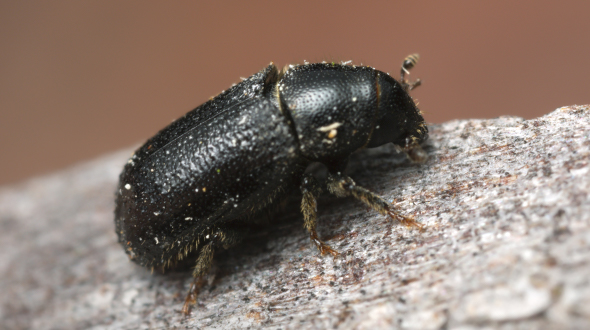
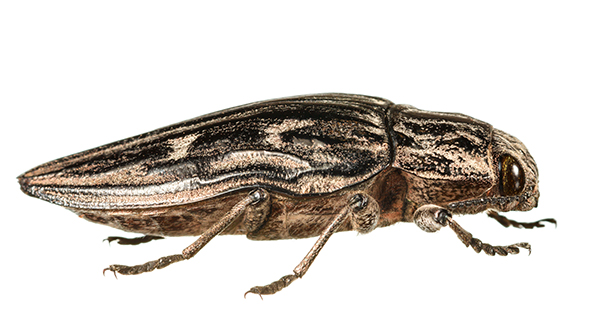
Wood boring insects includebark beetles

Prevent your trees from rapid decline and death when wood-boring insects attack. Knowing how to control wood-boring insects will help you keep your Marietta, Georgia, trees healthy and thriving.

toddsmariettatreeservices.com gathered wood-boring insect species, identification, and control information to help you keep your Marietta, Georgia, trees safe.

Wood-Boring Insects

Wood-boring insects include a range of arthropods that cause damage to trees and wooden structures. This group of insects features an array of insect species at different life cycle stages (from larvae to adults). Wood-boring insects are seen as pests due to the potentially severe damage they cause in urban and rural areas.

Wood-Boring Insect Control

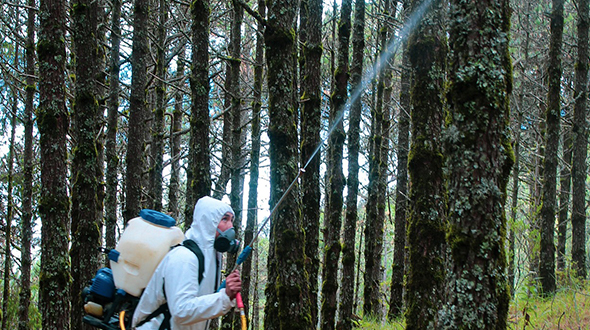
Wood boring insect control bark spray

Systemic insecticides applied via trunk injection, bark sprays, or as a soil drench are effective against flathead borers and may be the only practical method for treating tall trees. Popular systemic insecticides include:

  • Bonide Systemic Granules
  • Mighty Mint Insect and Pest Control
  • Natria Neem Oil Spray

Tip: Apply a systemic insecticide for trees when it is in the growing season.

Contact pesticides control wood-boring insects when they come in direct contact with the pest. Systemic insecticides are absorbed by and transported through plant tissue. Such products can render some or all of a plant toxic to insects that feed on it. Some common contact insecticides are:

  • Pyrethroids (bifenthrin and permethrin)
  • Chlorantraniliprole
  • Imidacloprid
  • Dinotefuran
  • Emamectin benzoate
  • Azadirachtin

Note: Each state has its own standards regarding pesticide use. Make sure you can legally use a pesticide before applying it to your tree(s).

Tip: Hire a professional tree service to treat your trees and alert regional representatives of any potential widespread infestations.

Wood-Boring Insect Species

Wood or tree borers could be bark beetles, twig pruners, or flat-headed borers, among other species. All boring insects are a hazard to a tree’s health, surrounding structures, and people. Consider the following species information:

1. Bark Beetles (Scolytinae)

Wood boring insects include their larva

Bark beetles tunnel under tree bark, cutting off its supply of food and water needed to survive. Bark beetles can kill a mature tree in two to four weeks during warmer months.

Identification – Bark beetle adults are tiny, cylindrical, hard-bodied insects about the size of a rice grain.
Tree Damage – Some trees slowly fade in color from green to brown, while others may die within a few weeks of infestation (these trees may not show signs of chlorosis, fading, or decline for several months.
Control Method(s) – If trees are infested, prune and dispose of bark beetle-infested limbs. If the tree’s trunk is extensively infested, the entire tree should be removed.

Note: The only effective treatment for bark beetles is preventative.

Vulnerable Tree Species: Bark beetles are attracted to tree species that are stressed, diseased, or injured.

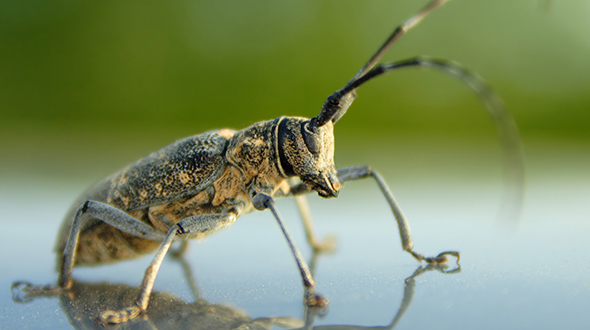
2. Twig and Branch Pruners (Elaphidionoides and Agrilus species)

Wood boring insects include twig pruners

This insect is considered a secondary invader of trees in decline. The twig pruner attacks healthy twigs and small branches (the female lays an egg in the bark, and when the eggs hatch, the legless grubs bore into the twig). Mature larvae chew concentric cuts outward in the white wood without chewing through the bark. The infested branch eventually drops to the ground with the larva inside.

Identification – The twig pruner is a slender grayish-yellow, long-horned beetle about 1/2 inch long.
Tree Damage – Twig and branch pruner larvae feed beneath the bark, girdling twigs and branches.
Control Method(s) – Pick up and destroy any detached twigs. The insect’s life cycle is completed inside these fallen twigs. Eliminating the litter interrupts the twig pruner’s life cycle, so they never have a chance to mature and reproduce.

Vulnerable Tree Species:

  • Hickory (Carya)
  • Maple (Acer)
  • Oak (Quercus)
  • Pecan (Carya illinoinensis)
  • Redbud (Cercis canadensis)
  • Elm (Ulmus)

3. Bronze Birch Borer (Agrilus anxius)

Wood boring insects include agrilus anxius

The bronze birch borer is found throughout birch ranges in the US and Canada. It attacks and breeds in birch trees but has been spotted in beech and aspen stands.

Identification – Bronze birch borers are 1/4 to 1/2 inch long, slender, dark iridescent, and bronze colored.
Tree Damage – Signs of this insect include off-color and thinning foliage in a birch’s upper canopy, dead branches in the upper crown, and swollen ridges on the tree’s trunk and branches.
Control Method(s) – Between May and June, you can spray infested trees with horticultural oil, permethrin, or bendiocarb to kill hatching larvae and adults emerging from the bark and feeding on leaves.

Vulnerable Tree Species:

  • Paper birch
  • Yellow birch
  • Gray birch
  • Western birch
  • Water birch
  • Sweet birch

4. Emerald Ash Borer (Agrilus planipennis) (EAB)

Wood boring insects include agrilus planipennis

The emerald ash borer (Agrilus planipennis or EAB) is an invasive wood-boring beetle. Despite their color and appearance, these beetles are difficult to spot in the wild!

Identification – Adult EABs are bright, metallic green, with red metallic abdominal segments beneath their wing covers. This beetle is about 1/2 inch long and 1/8 inch wide with a flattened back.
Tree Damage – Larvae feed on the inner bark of ash trees from early summer to mid-fall, causing hydraulic failure and death. Infested native ash trees are all susceptible to attack.
Control Method(s) – When caught in an infestation’s early stages, emerald ash borer can be controlled by using systemic insecticides that are taken into the tree and move to areas where they can kill adults (leaves) or the flathead borer larvae (cambium).

Vulnerable Tree Species: In North America, all ash tree species can be attacked by EAB.

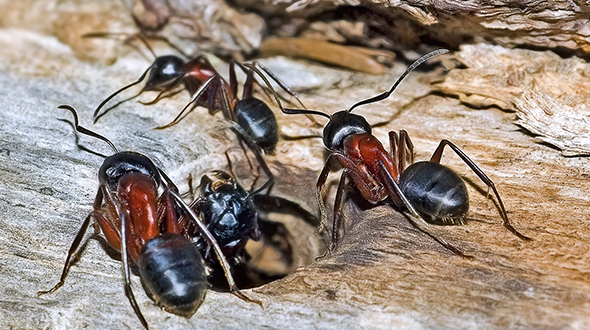
5. Carpenter Ants (Camponotus)

Wood boring insects include carpenter ants

Carpenter ants get their common name because they excavate decayed wood to build their nests. Their excavation results in smooth tunnels inside wood. Similar to termites, this excavation activity can severely compromise a tree’s structural soundness.

Identification – Carpenter ants are about a half-inch long and completely black with yellowish hairs on the abdomen.
Tree Damage – This species does not eat wood; they only tunnel and chew through it to create nests. Typically, these ants burrow into trees already compromised by disease, softening their hardwood and facilitating the insect infestation.
Control Method(s) – A soap and water mixture is toxic to carpenter ants. Mix one part dish soap with two parts water in a spray bottle. Spray this mixture on the ants and around their nesting site as needed to kill them and eliminate their pheromone trails. Continue treating problem areas until the ants no longer return.

Vulnerable Tree Species: Any tree species compromised by a fungal infection.

Tip: Some insects are affected and can be contained without toxic checmicals, so read the following to learn how to make homeade bug spray.

Wood-Boring Insects in Marietta, Georgia

In this article, you discovered essential species, identification, and control information on several wood-boring insects adversely affecting Marietta, Georgia’s tree population.

Knowing how to identify wood-boring insects and control them will help you preserve your trees while keeping these insects from spreading unhindered.

Ignoring the need to control wood-boring insects can lead to the rapid decline and death of trees, potentially causing catastrophic damage when they topple.

Sources:
entomology.ca.uky.edu/ent43
xerces.org/systemic-insecticides-reference-and-overview
extension.colostate.edu/topic-areas/insects/insecticides-used-to-control-emerald-ash-borer-on-residential-shade-trees-5-626/
emeraldashborer.info/faq.php
content.ces.ncsu.edu/twig-pruner
readyforwildfire.org/forest-health/bark-beetle-information/about-bark-beetles/

Todd’s Marietta Tree Services
Marietta, GA (678) 505-0266


Originally published on: http://www.toddsmariettatreeservices.com/how-to-control-wood-boring-insects-in-marietta-georgia-trees/

Thursday, October 13, 2022

Where To Place Landscape Lighting

Landscape lighting can be placed in areas around trees and shrubs

Avoid a dark and potentially dangerous landscape due to not knowing how to properly light it. Knowing where and how to use landscape lighting will enhance your home’s security, highlight your yard’s features, and increase your home’s curb appeal.

toddsmariettatreeservices.com gathered the following information on where and how to place landscape lighting to increase your home’s value and enhance its safety.

Where Should I Put Front Yard Lights?

Your landscape and home can appear more beautiful and illuminated, and front yard landscape lighting naturally increases security by lighting up your entryways. Well-lit homes and yards are significantly less likely to be vandalized or invaded. Consider the following:

Path Lights – These are excellent lighting sources around the perimeter of a yard or to define a driveway/pathway entrance and illuminate walkway areas. This method of outdoor lighting adds to the overall ambiance and serenity of your exterior space.

Tip: Ideally, the lamps should be placed 10 to 15 feet apart, creating connecting pools of light that gently lead the way.

Hanging Lights – These fixtures are perfect for above a front door, gazebo, or porch area. They help with general illumination and add sophisticated detail to your home’s exterior living or gathering space.

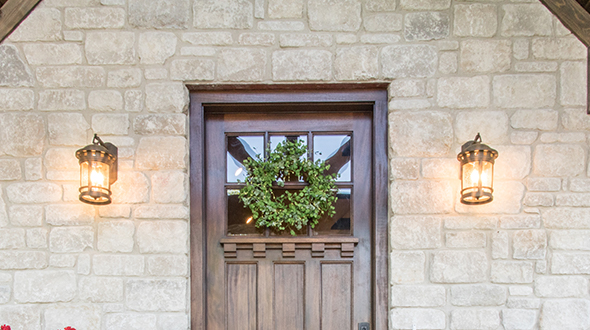
Landscape lighting can be placed in areas like doorways

Up and Down Lights – Uplights are placed at ground level and aimed up to highlight focal or interest points in the landscape, like specimen trees, signs, water features, and architecture. Downlights are placed above an object or area and aimed down to imitate natural lighting like simulating moonlight or for providing an added layer of security to an area.

Wall-Mounted Outdoor Lighting – This type of lighting can be mounted on either side of a front, back, or garage door, and around the home’s exterior walls. Wall lighting can significantly increase curb appeal and visibility from the street and helps a home stand out in the neighborhood.

Driveways Low-Voltage Landscape Lighting – This convenient lighting is easy to install and uses less energy than other systems, making it an excellent option to light your way home.

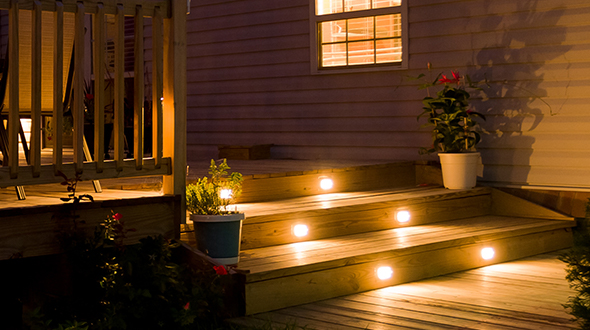
Steps and Stairways – Steps should always be lighted for safety, and this can be done on the risers or the treads.

Landscape lighting can be placed in areas with steps

Doors – Place lights to each side or overhead at the front, back, and side entry doors for increased security.

Note: Designing your landscape with light requires the same planning as traditional landscape. Identify an area, object, or focal point within the yard to be lit and its most striking features.

How Far Apart Should I Place Landscape Lights?

Generally, you have to plan where your outdoor landscape lights should be placed. It is preferable to place the lights six to eight feet apart to ensure your yard, pathways, and driveway remain bright and continuously well-lit. However, spacing them closer is an option, particularly if you are trying to create an especially vivid lighting effect.

Where Do You Put Security Spotlights?

Landscape lighting can be placed in areas that need to be lit for security

There are a few places to install security lights. One is above garages, decks, and patios. There’s usually increased nighttime activity in these places, like walking in and out of the house. It’s great when a light is on, or comes on, so you can see where you are stepping.

Tip: Motion sensor-activated lights are best placed 7 to 10 feet above the ground and facing downwards. The higher the lights are located, the wider radius they will cover.

Solar Powered Landscape Lights

Landscape lighting can be placed in areas like walkways and driveways

For some, outdoor, solar-powered lights are a perfect landscape lighting solution. They tend to be budget-friendly and easy to install, and you can move them exactly where you want them since they don’t rely on hard-wired power sources.

However, for others, most solar landscaping lights do not offer the durability, brilliance, and energy outputs of low-voltage LED lighting systems. Most solar landscape fixtures are poorly constructed with cheap plastics and extremely low-light output lamps. Consider the following pros and cons:

Solar Landscape Lighting Pros:

  • No Electrical Connection Needed
  • Long-Term Savings Potential
  • Easy to Install

Solar Landscape Lighting Cons:

  • Fixtures Require Sunlight to Operate
  • Frequent Maintenance Required
  • Inconsistent Lighting

Note: Dark corners, covered patios, and other shaded areas that may need lighting may not be appropriate locations for solar lighting.

These convenient, ready-to-use solar lights may work great in parts of your yard that get some lighting. Then, you can install traditional wired lights in other parts of the landscape that need stronger, more consistent lighting.

Should I Leave Landscape Lighting on All Night?

Yes and no. If you have general landscape lighting, keep these lights on for the entire night (dusk to dawn). Use garden lights and spotlights with motion detectors, placing them strategically around the perimeter of your home. Areas where vandals or intruders can hide from view, are of particular interest.

Note: If you select solar-powered landscape lighting, your landscape’s lighting will be limited to the amount of energy each light fixture has stored that day.

Landscape Lighting

In this article, you discovered essential information and tips on where and how to install landscape lighting on your property.

Knowing how to adequately light your yard will help you increase your home’s curb appeal and value while adding a crucial layer of security to your property.

Ignoring the need for landscape lighting can leave your property targets to thieves and vandals, while making steps and objects nighttime trip hazards.

Sources:
cals.arizona.edu/yavapai/anr/hort/byg/archive/outdoorlandscapelighting.html
hortnews.extension.iastate.edu/1994/5-25-1994/light.html

Todd’s Marietta Tree Services
Marietta, GA (678) 505-0266


Originally published on: http://www.toddsmariettatreeservices.com/where-to-place-landscape-lighting/

Friday, September 23, 2022

How to Landscape My Front Yard

landscaping a front yard includes grass shrub and tree selection

Avoid the embarrassment of a poorly landscaped front yard. Knowing how to design and grow a hardy landscape will help you contribute to your neighborhood’s beauty and benefit the surrounding ecosystem.

toddsmariettatreeservices.com gathered the following information on landscape design, plant, shrub, and tree species to help you assemble a stunning and healthy front yard.

Front Yard Design

You can develop a rough preview of your front yard landscaping using the following:

Draw Your Front Yard – Your scale drawing should include measurements, garden and feature location, tree and shrub location, where you want walkways and driveways, and list any preferred grass, plant, shrub, and tree species.

Site analysis – Have soil tests performed to ensure that your yard contains the appropriate mineral content and pH level to help your selected plant and tree species thrive.

Tip: The most efficient way to test your soil is to send a sample to a Cooperative Extension Service (usually located at or affiliated with your state’s university) or a commercial soil laboratory (search online for commercial soil-testing labs near me).

Hardiness Zone Definition – The USDA Plant Hardiness Zone Map is the recognized standard gardeners and growers use to determine which grass, plant, shrub, and tree species are most likely to thrive at a location. The map is defined and segmented by the average annual minimum winter temperature. To define your hardiness zone, use the interactive map at planthardiness.ars.usda.gov/

Prioritize Landscape Needs and Wants – You may “want” to have a lush green lawn with water features, but your neighborhood may require strict water usage policies leaving you “needing” a more water-conscious design.

Inform yourself about any water, land, or species restrictions by looking over your HOA agreement, city website, or municipal codes found at this interactive website library.municode.com/

Note: Some cities or municipalities will list preferred and/or banned trees and plants to help avoid planting any invasive or damaging species.

Consider Yard Maintenance Requirements – Each type of landscape you install will require different levels of attention and maintenance. The more trees you install, the more seasonal pruning will be necessary. The more grass you have, the more mowing and trimming you’ll have to do. If you don’t plan on hiring a landscaping and tree service to help you with your yard’s upkeep, you must ask how much work and devotion you are willing to commit to it.

landscaping a front yard includes maintenance to keep it neat and fresh

Determine a Budget – Your ideas for a spectacular front yard will come with a price tag. For each of your yard’s components, you should quote the required material, individual trees and plants, fertilizer, mulch, gravel, concrete, lighting, etc.

Tip: When your front yard design is complete, use it to quote landscapers and tree services installation and eventual maintenance charges.

Identify Patio, Porch, and Sitting Areas – Take the time to map out the area around the home that can be used for lounging, container gardening, etc.

Plant Native Species

When planning your front yard landscaping, include as many native grasses, plants, shrubs, and tree species as possible. Some native species benefits include:

  • Being Low Maintenance
  • Requiring Less Water
  • Attracting Local Pollinators
  • Producing Beautiful Flowers
  • Serving as Food and Shelter for Native Wildlife

Native species are more robust and well-adapted to your environment, lending to a more attractive and engaging landscape.

Best Front Yard Trees

When selecting a tree as your front yard’s center of attention or specimen, consider the species, size at maturity, and hardiness zone. The following are popular front yard and specimen trees:

Serviceberry (Amelanchier) This species reaches 15 to 25 feet high and has a spread of 15 to 25 feet. This tree thrives in zones 2 through 9.

Crabapple (Malus) This fruiting species reaches 6 to 10 feet high and has a spread of 6 to 12 feet. The species thrives in zones 3 through 8.

Chinese Dogwood (Cornus kousa) This beautiful tree species reaches 15 to 25 feet high and has a spread of 25 feet. This tree thrives in zones 3 through 8.

Japanese Maple (Acer palmatum) This species reaches 15 to 25 feet high and has a spread of 20 feet. This maple variety thrives in zones 5 through 8.

Eastern Redbud (Cercis canadensis) This stunning species reaches 20 to 30 feet high and has a spread of 25 to 35 feet. Redbud trees thrive in zones 5 through 9.

Southern Magnolia (Magnolia grandiflora) This impressive species reaches 60 to 80 feet high and has a spread of 40 feet. This popular specimen tree thrives in zones 5 through 9.

landscaping a front yard includes selecting tree species

Lemon Trees (Citrus limon) This fruiting species reaches 10 to 20 feet high and has a spread of 8 to 12 feet. This magnificent tree thrives in zones 8 through 11.

Tip: Consult your local nursery or arborist for planting and specific tree variety recommendations. They will also have information regarding potential disease threats and insect infestation warnings.

Front Yard Landscaping

In this article, you discovered information to help you design your front yard landscape and determine which grass, plant, shrub, and tree species to plant.

Planning your front yard landscape will help you visualize the finished product and develop an eco-friendly environment that blends in with your neighbors’ yards while expressing your unique style and taste.

Leaving your front yard as it is (in disarray) will leave you embarrassed and potentially lower your home’s curb appeal and value.

Sources:
extension.missouri.edu/publications/g6905
extension.psu.edu/why-use-native-plants
hgic.clemson.edu/factsheet/serviceberry/
extension.colostate.edu/topic-areas/yard-garden/flowering-crabapple-trees-7-424/
plants.ces.ncsu.edu/plants/cornus-kousa/
edis.ifas.ufl.edu/publication/ST023
hort.extension.wisc.edu/articles/eastern-redbud-cercis-canadensis/
landscapeplants.oregonstate.edu/plants/magnolia-grandiflora
hort.purdue.edu/newcrop/morton/lemon.html

Todd’s Marietta Tree Services

200 Cobb Pkwy N Ste 428 Marietta, GA 30062
(678) 505-0266

Originally published on: http://www.toddsmariettatreeservices.com/how-to-landscape-my-front-yard/

Wednesday, August 17, 2022

Perfect Pine Trees for Your Marietta Georgia Yard

Ideal pine trees for marietta georgia yards include several vibrant robust and shapely species

Avoid the embarrassment of a dead-looking yard in the fall and winter months. Knowing which pine trees to plant in Marietta, Georgia, will help you grow a yard full of color and life.

toddsmariettatreeservices.com gathered the following species information and growing tips for five pine tree species perfect for Marietta, Georgia’s climate, and your yard.

What is Special about Pine Trees?

Pine trees are evergreens, and they keep their needles for about 2 years. When old needles fall, new needles quickly replace them. Pine tree needles can measure from one to eleven inches long, depending on the species. Both male and female pine trees produce pine cones. Consider the following species hardy to Marietta’s zone 7b.

Scots Pine (Pinus sylvestris)

Ideal pine trees for marietta georgia yards include scots pine

The Scots pine is a tall, straight pine tree with distinctive orange-brown bark. Its blue-green needles appear in pairs and can be up to 7cm long. Male cones are yellow while female cones are green, maturing to grey-brown.

Size at Maturity – This species can reach a height of 60 feet with a spread of 40 feet
Soil Requirements – Scots pine trees thrive in acidic (4.5 to 6.0 pH), loamy, moist, sandy, well-drained, and even dry soils. The species has some drought tolerance.
Sun Requirement – This pine tree thrives in full sun (minimum 6 hours daily)
Needle Length – Scots pine trees feature blue-green needles that vary in length (from one to three inches). Needle color frequently changes to a yellowish-green in the winter.

Eastern White Pine (Pinus strobus)

Ideal pine trees for marietta georgia yards include eastern white pines

This pine has slender, greenish-blue needles that are two to five inches long and grow in bundles of five. It has long, narrow yellowish-brown cones six to eight inches long. The bark of the Eastern white pine is smooth and gray on young trees, becoming gray-brown and deeply furrowed as the tree ages.

Size at Maturity – This species can reach a height of 80 feet with a spread of 40 feet
Soil Requirements – The eastern white pine grows in acidic (5.5 pH), moist, well-drained, and dry soils. While it grows best in moist soil, the tree can tolerate everything from dry, rocky ridges to bogs.
Sun Requirement – This pine tree species thrives in full sun and partial shade (minimum 4 hours of daily unfiltered sunlight)
Needle Length – Commonly cut down and used as Christmas trees, this species features long, slender, blue-green needles, often reaching five inches in length, in bundles of 5 that are soft and flexible.

Colorado Blue Spruce (Picea pungens)

Ideal pine trees for marietta georgia yards include blue spruce

Blue spruce, also known as Colorado spruce, is a conical-shaped evergreen tree with stiff horizontal branches and short, stiff needles. It is a commonly used tree in Midwest landscapes, although the species struggles with fungal infections as it ages.

Size at Maturity – This species can reach a height of 75 feet with a spread of 20 feet
Soil Requirements – This species can adapt to and thrive in moderately acidic (5.5 to 7.0 pH), loamy, moist, rich, sandy, well-drained, and even clay soils. It requires regular moisture with moderate tolerance to both flooding and drought.
Sun Requirement – This pine tree thrives in full sun (minimum 6 hours daily)
Needle Length – The Colorado Blue Spruce features stiff, prickly, and roughly 1 to 1½ needles. This species provides privacy and an efficient windbreak when planted in a row.

Japanese White Pine (Pinus parviflora)

Ideal pine trees for marietta georgia yards include japanese white pines

The Japanese white pine has long, narrow yellowish-brown cones six to eight inches long. The bark of the white pine is smooth and gray in its youth, becoming gray-brown and deeply furrowed as it ages.

Size at Maturity – This species can reach a height of 50 feet with a spread of 40 feet
Soil Requirements – Japanese white pines flourish in well-drained, moderately acidic (5.6 to 7.0 pH) soil is the main requirement for success with Pinus parviflora. It is even tolerant of poor soil as long as drainage is good.
Sun Requirement – This pine tree thrives in full sun (minimum 6 hours daily)
Needle Length – Pinus parviflora grows slender, greenish-blue needles that are 2.5-5 inches long, growing in soft bundles of five.

Marietta, Georgia Pine Tree Species

In this article, you discovered information and planting tips for several pine trees hardy to Marietta, Georgia’s zone 7b climate.

Knowing which evergreen pine trees will flourish in your Marietta yard will help you avoid the embarrassment of a dry and lifeless-looking fall and winter landscape and give you an extra outdoor holiday decorating opportunity.

Not planting pine trees in your Marietta yard will leave you with a landscape appearing to be desolate and dead.

Sources:
hort.ifas.ufl.edu/trees/PINPARA.pdf
arboretum.harvard.edu/plant-bios/colorado-blue-spruce/
plants.ces.ncsu.edu/plants/pinus-strobus/
landscapeplants.oregonstate.edu/plants/pinus-sylvestris
extension.missouri.edu/publications/g6815

Todd’s Marietta Tree Services

200 Cobb Pkwy N Ste 428 Marietta, GA 30062
(678) 505-0266

Originally published on: http://www.toddsmariettatreeservices.com/perfect-pine-trees-for-your-marietta-georgia-yard/

Thursday, July 14, 2022

5 Medicinal Shrubs for Your Marietta Georgia Landscape

Medicinal shrub and tree species include multiple varieties found worldwide

What if the shrubs you planted were not only visually appealing, but also had medicinal and therapeutic properties. Knowing what medicinal shrubs to plant on your landscape can offer additional benefits and be utilized when needed.

toddsmariettatreeservices.com gathered the following species and growing information for 5 medicinal shrubs that should be planted in your Marietta, Georgia landscape.

What are Medicinal Shrubs

Medicinal shrubs, also called medicinal herbs or plants, are used for their scent, flavor, or therapeutic properties. Herbal medicines are one type of dietary supplement sold as tablets, capsules, powders, teas, extracts, and fresh or dried plant parts. People have used herbal medicines to maintain or improve their health for generations. Consider planting the following medicinal shrubs in your Marietta, Georgia yard and garden:

1. Peppermint (Mentha × piperita)

Medicinal shrub and tree species include peppermint

Peppermint is a hybrid mint. It is a cross between watermint and spearmint and is indigenous to Europe and the Middle East. Nowadays, the plant is grown and cultivated in many regions around the world.

Mature Size – Peppermint can reach heights of 3 feet and a width of 2 to 3 feet.
Sun Requirements – This species thrives in a part shade to full sun location.
Preferred Soil and pH – Peppermint is an adaptable plant but prefers well-draining, loose, organically-rich soil with a pH ranging from 5.5 to 6.0.
Water Requirements – Water this species 2 times per week, keeping soil evenly moist without saturating it.
Medicinal Value – Peppermint oil is promoted for topical use (applied directly to the skin) for headaches, muscle aches, joint pain, and itching/skin irritation. In aromatherapy, peppermint oil is used to treat coughs and colds, improve mental function, and significantly reduce stress.
Hardiness Zone – 5 through 10

2. Lavender (Lavandula)

Medicinal shrub and tree species include lavender

Lavender is a genus of 47 known species in the mint family. It is native to the Mediterranean’s hot, dry climate and can currently be found growing in most temperate climates worldwide.

Mature Size – Lavender can reach heights of 2 feet and a width of 2 to 3 feet.
Sun Requirements – This species thrives in a full sun location (6 hours or more).
Preferred Soil and pH – Lavender prefers well-draining soils with a pH ranging from 6.7 to 7.3.
Water Requirements – Water mature lavender plants every 2 to 3 weeks until buds form, then once or twice weekly until harvest.
Medicinal Value – Aromatherapists utilize lavender for inhalation therapy to treat headaches, nervous disorders, and exhaustion. Herbalists use lavender oil to treat skin ailments like fungal infections, wounds, eczema, and acne. This species is also used in healing baths for joint and muscle pain.
Hardiness Zone – 5 through 9

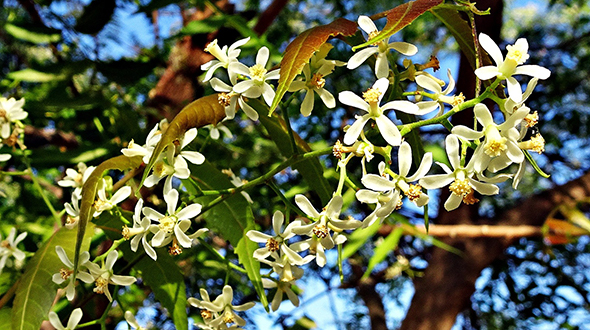
3. Neem (Azadirachta indica)

Medicinal shrub and tree species include neem

Since antiquity, neem has been renowned for healing. The earliest medical writings refer to the benefits of its fruits, seeds, oil, leaves, roots, and bark. Each of these elements has long been used in Indian medicine, and over thousands of years, millions of Asians have used neem medicinally.

Mature Size – Neem will typically grow as a tree reaching 50 to 65 feet tall with a well-rounded crown.
Sun Requirements – This species thrives in full sun – 6 hours or more.
Preferred Soil and pH – Neem will adapt to nearly any soil type and can tolerate pH values up to 8.5.
Water Requirements – Water mature neem specimens once weekly without overwatering.
Medicinal Value – Neem’s medicinal values are principally found in its foliage. Neem leaves exhibit immunomodulatory, anti-inflammatory, anti-hyperglycemic, anti-ulcer, anti-malarial, anti-fungal, anti-bacterial, anti-viral, antioxidant, anti-mutagenic, and anti-carcinogenic properties.
Hardiness Zone – 10 through 12 (Marietta’s winter temperatures will likely cause this species to lose its foliage in the colder months)

4. Cinnamon (Cinnamomum verum)

Medicinal shrub and tree species include cinnamon

This species bears clusters of tiny star-shaped flowers in springtime, becoming small, dark purple fruit that smells like cinnamon. However, the spice is made from the species’ bark.

Mature Size – Cinnamon will typically grow as a tree reaching 50 feet tall with a well-rounded crown.
Sun Requirements – This species requires full sun. Plant your cinnamon in a location that gets at least twelve hours of daily sunlight.
Preferred Soil and pH – Cinnamon thrives in well-drained sandy soil with a 4.5 to 5.5 pH.
Water Requirements – Water mature cinnamon specimens once or twice weekly without overwatering.
Medicinal Value – Cinnamon Lowers Blood Sugar Levels and Has a Powerful Anti-Diabetic Effect. Cinnamon is well known for its blood-sugar-lowering properties.
Hardiness Zone – 9 through 11 (this species will require protection/shelter from Marietta’s winter temperatures)

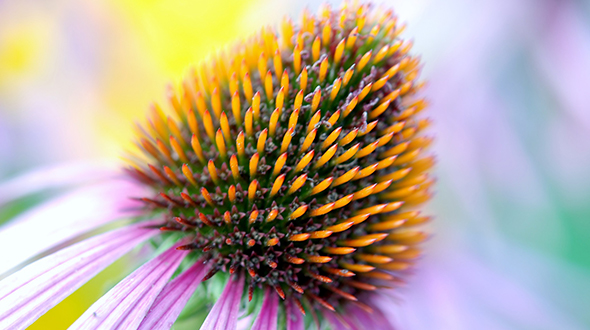
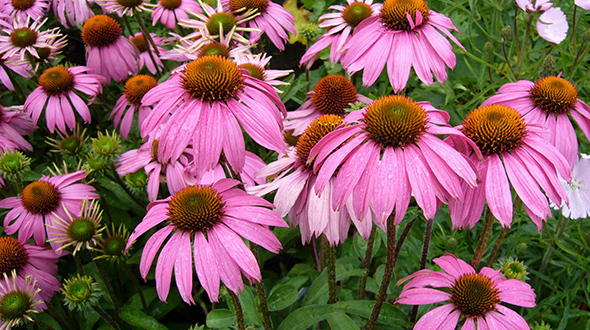
5. Echinacea or Purple Coneflower (Echinacea purpurea)

Medicinal shrub and tree species include echinacea

Echinacea purpurea is a perennial herb native to the midwestern region of North America. It has tall stems that bear single pink or purple flowers with a central cone that is usually purple or brown. The large cone is a seed head with sharp spines resembling a stiff comb.

Mature Size – This species can reach heights of 4 feet and a width of 1 to 3 feet.
Sun Requirements – Echinacea thrives in full to partial sun, needing at least four hours of sunlight per day.
Preferred Soil and pH – Echinacea purpurea is adaptable to most soil types but prefers a sandy, well-drained loam and thrives in a 6.0 to 7.0 pH.
Water Requirements – Purple coneflowers require regular watering – about 1-inch per week.
Medicinal Value – Use echinacea to shorten the common cold and flu, and reduce symptoms, like sore throat, cough, and fever. Herbalists also recommend echinacea to help boost the immune system, helping the body fight infections.
Hardiness Zone – 3 through 9

Medicinal Shrubs in Marietta, Georgia Landscapes

In this article, you discovered species, growing, and medicinal information for several species that can thrive in Marietta, Georgia, landscapes.

Knowing which medicinal plant, shrub, or tree species to grow in your Marietta, Georgia, yard will help you grow an eclectic and intriguing landscape.

Without knowing shrubs can serve more than landscaping purposes, you would miss the therapeutic and healing advantages that some offer.

Sources:
plants.ces.ncsu.edu/plants/mentha-x-piperita/
heritagegarden.uic.edu/lavender-lavandula
nap.nationalacademies.org/read/1924/chapter/8
uaex.uada.edu/yard-garden/resource-library/plant-week/Cinnamomum-cassia-Cinnamon-09-08-2017.aspx
hgic.clemson.edu/factsheet/echinacea/

Todd’s Marietta Tree Services

200 Cobb Pkwy N Ste 428 Marietta, GA 30062
(678) 505-0266

Originally published on: http://www.toddsmariettatreeservices.com/5-medicinal-shrubs-for-your-marietta-georgia-landscape/

Tuesday, February 22, 2022

5 Flowering Plants for Your Marietta Georgia Garden

Marietta georgia gardens are perfect for many flower species

Avoid the embarrassment of a garden without flowers. Knowing which flowers to plant in your Marietta, Georgia garden will help you cultivate color from early spring through late fall.

toddsmariettatreeservices.com gathered the following information about flowering plants and their needs for your Marietta, GA garden (Hardiness zone 7b).

Gerbera Daisies (Gerbera)

Marietta georgia gardens are perfect for gerbera daisies

Gerbera daisies have long-lived 3 to 4-inch flowers that can be found in yellow, white, pink, red, orange, lavender, salmon, and multicolored shades. The center floral disk ranges from a yellow to black appearance.

Size – Gerbera daisies typically grow 6 to 18 inches tall.
Sun – This species is a full-sun plant but will adapt to light shade. Plant Gerberas in a site that receives six to eight hours of sun daily.
Water – Gerbera daisies require regular watering. Water only when the soil has dried 1 to 2 inches below the surface.
Soil – Your daisies will thrive in rich soil high in organic matter and well-drained. This daisy species prefers soil with a 5.5 to 6.5 pH level.
Blooms – Gerbera daisies produce their flowers from mid to late spring through the fall in the garden, and their blooms are long-lasting when cut.

Daisies (Bellis perennis)

Marietta georgia gardens are perfect for daisies

Daisies produce flowers with a rosette of small, thin white petals surrounding a bright yellow or dark brown floral disk. These blooms are supported by a single stem that grows from a group of dark green rounded leaves. The petals can sometimes emerge tinged in pink. It is a common cultivated or wildflower found growing in prairies, lawns, gardens, on hillsides, and along roadsides.

Size – Daisies can range from 10 inches to over 2 feet tall and include varieties with single, double, or ruffled petals.
Sun – This species is another full-sun plant requiring six to eight hours of sun daily.
Water – Daisies typically require 1 to 2 inches of water per week in the summer months. During spring and fall, daisies need about 1 to 2 inches of water every other week.
Soil – Daisy flowers will tolerate nearly any soil type. However, they thrive when the soil is 12 to 15 inches deep, allowing the root system enough room to fully expand.
Blooms – Daisy blooms typically emerge in late spring and continue blooming until early fall.

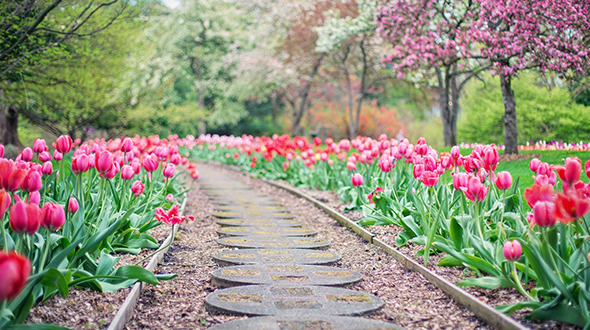
Tulips (Tulipa)

Marietta georgia gardens are perfect for tulips

The tulip ranks among the most popular of the spring-flowering plants. These bulbs typically bear cup-shaped flowers in practically every shade except true blue. They can be double or single, fringed or twisted, perfumed or non-scented.

Size – Tulips can range from 10 inches to over 2-1/2 feet tall when in bloom.
Sun – Plant tulip bulbs where they will receive full sun. This will help them reach their maximum height and flower size. Tulips also perform well in partial sun and beneath deciduous trees.
Water – Tulips require very little water. If you water them well when planting, you can practically forget them until spring. However, during extended periods of drought, water them weekly to keep the ground moist.
Soil – Tulips thrive when grown in loose, crumbly soil that is easy to work and very well-drained.
Blooms – Tulips typically bloom from March to April, while mid-season varieties will extend the blooming period much later into spring. In cool weather, your tulips may last 1-2 weeks.

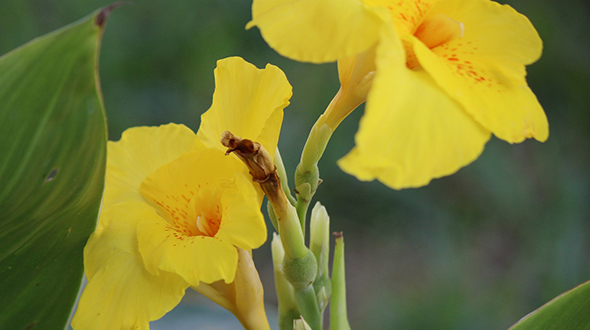
Canna Lily (Canna)

Marietta georgia gardens are perfect for canna lilies

The canna lily species is a perennial with tropical-like foliage and large, striking flowers. Canna lilies are extremely low maintenance and easy to grow. Both the flowers and foliage provide long-lasting color in the garden, with the flowers blooming in red, orange, or yellow shades.

Size – Cannas have strong upright growth habits. Most varieties will grow between 3-5 feet tall, with some reaching 8 feet tall.
Sun – Cannas are tropical plants and thrive in full sun and summer heat.
Water – Once sprouted, water your cannas once per week by soaking the area around the roots. In peak summer weeks, water them liberally every other day.
Soil – Canna lily plants grow best in rich, water-retentive but well-drained soils high in organic matter and with a 6.5 pH.
Blooms – Cannas typically bloom from mid-summer to fall.

Marigolds (Tagetes)

Marietta georgia gardens are perfect for marigolds

Marigold species are annual flowers that bloom so full and well over a long season that they are commonplace in gardens everywhere. The plant blooms large, fully double flowers in bright yellow, gold, and orange shades.

Size – Marigold species come in a range of sizes from 6 inches to 3 feet tall.
Sun – Plant marigolds where they will receive full sun. This species also performs well in partial shade.
Water – Marigolds in gardens require watering once weekly. After watering, the soil should be moist to a depth of 6 to 8 inches. When the weather is hot or unusually windy, your plants will need extra watering.
Soil – Though marigolds grow in almost any soil, they do best in loamy, moderately fertile, well-drained soil.
Blooms – Most marigold varieties bloom from early summer until the frost in late fall.

Blooming Plants for Zone 7b

In this article, you discovered several flowering plant species and their needs for your Marietta, GA garden in USDA hardiness zone 7b.

Planting flowering plant species (angiosperms) will help you maintain a beautiful garden full of rich, deep colors and show-stopping blooms from spring through fall.

Leaving your garden void of flowering plants is a missed opportunity to increase your home’s curb appeal and avoid the embarrassment of watching your neighbor’s gardens in full bloom.

Sources:
hgic.clemson.edu/factsheet/marigold/
extension.umn.edu/flowers/calla-and-canna-lilies
extension.uga.edu/publications/detail.html?number=B918&title=Flowering%20Bulbs%20for%20Georgia%20Gardens
gardeningsolutions.ifas.ufl.edu/plants/ornamentals/shasta-daisy.html
extension.sdstate.edu/gerbera-daisies

Todd’s Marietta Tree Services

200 Cobb Pkwy N Ste 428 Marietta, GA 30062
(678) 505-0266

Originally published on: http://www.toddsmariettatreeservices.com/5-flowering-plants-marietta-georgia-garden/