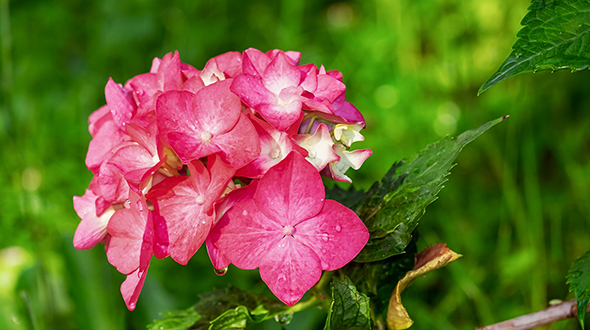
Showing posts with label Rhododendron. Show all posts

Wednesday, March 16, 2022

5 Flowering Shrubs for Your Marietta Georgia Yard (Zone 7b)

Flowering shrubs hardy to zone 7b are perfect for your marietta georgia yard

Avoid an ugly and bland yard with dying shrubs in Marietta, Georgia. Knowing which flowering shrubs are hardy to zone 7b lets you plant and grow spectacular flowering shrubbery.

toddsmariettatreeservices.com gathered the following species and planting information about 5 beautiful flowering shrubs for your Marietta, Georgia yard and garden.

1. Azalea (Rhododendron)
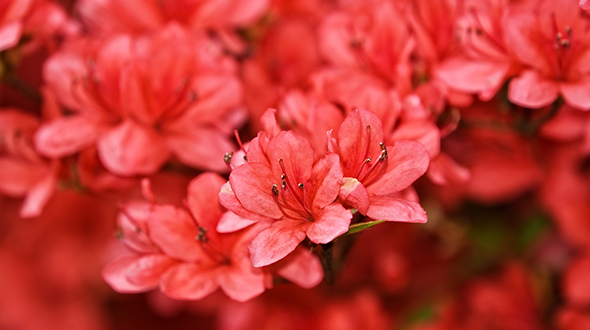
Flowering shrubs like azaleas are perfect for your marietta georgia yard

Azalea is the popular name for a group of flowering shrubs in the Rhododendron genus. These shrubs are characterized by the absence of scales on the underside of the thin, soft, and pointed leaves. This shrub typically has terminal blooms – with one flower per stem.

Sun Requirements – Azaleas thrive in full sun (about 4 hours per day) or part shade.
Soil Requirements – This species requires well-drained, acidic soil. You should test the soil regularly and keep it below a 6.0 pH.
Size at Maturity – Some azalea species reach heights of 20 feet or more, dwarf azaleas only grow to 2 or 3 feet tall, while many garden azalea varieties average 4 to 6 feet in height.
Flowers – Azaleas tend to bloom from early February to September.

2. Forsythia (Forsythia)
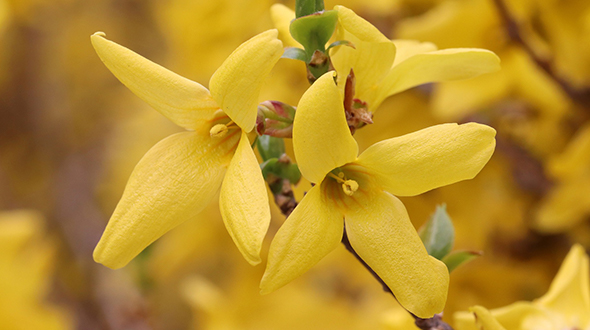
Flowering shrubs like forsythia are perfect for your marietta georgia yard

Forsythia is a deciduous shrub with stems that start green but turn woody and display a rough gray bark. For most of the year, the shrub remains covered in dense, bright green foliage.

Sun Requirements – This species does best in full sun (about 4 hours per day) or part shade.
Soil Requirements – Forsythia shrubs will adapt to most soils. However, they prefer loose, well-draining soil and do best in soils with a pH ranging from 7.0 to 8.0.
Size at Maturity – The forsythia species grows to a mature height of 8 to 10 feet and a spread of 10 to 12 feet.
Flowers – Forsythia blooms overwhelming amounts of bright yellow flowers in the spring.

3. Rose (Rosa)

Flowering shrubs like rose are perfect for your marietta georgia yard

Roses are upright, climbing, or crawling shrubs. Rose’s stems are typically copiously covered in sharp, protective thorns. The shrub’s foliage is usually feather-formed and sharply toothed.

Sun Requirements – Rose shrubs perform best in full sun (about 4 hours per day).
Soil Requirements – Roses require good drainage and rich, moisture-retentive soil, with a pH between 6.5 and 7.
Size at Maturity – Roses varieties range from miniatures (8 inches tall) to tree-climbing vines that easily reach 50 feet or more.
Flowers – Most roses bloom in springtime, with some varieties flowering again in the fall.

4. Hydrangea (Hydrangea)
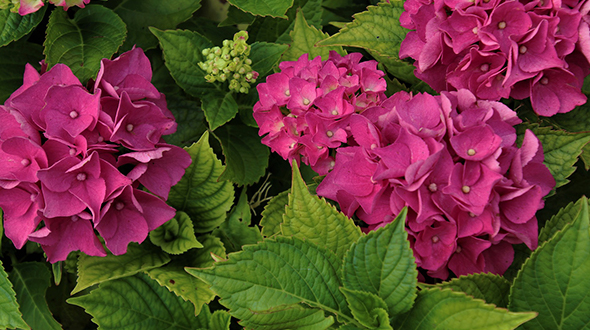
Flowering shrubs like hydrangea are perfect for your marietta georgia yard

Hydrangeas are popular as cut flowers and shrubs for the yard because of their oversized, beautiful blooms. The large flower clusters look like a cheerleader’s pom-poms growing on bushes that sometimes grow as tall as trees. The shrubs come in a variety of different colors (often determined by your soil’s mineral content) and shapes.

Sun Requirements – Hydrangeas thrive with morning sun and partial shade later in the day.
Soil Requirements – Most hydrangeas will do best in fertile, well-drained soils that get plenty of moisture. Consider adding compost to enrich poor soil.
Size at Maturity – Some species only grow to about 2 or 3 feet tall and wide, while others can reach 6 feet tall with a 6-foot spread.
Flowers – Most hydrangeas put on their buds in early summer to only bloom in the following spring, summer, and early fall seasons.

5. Tea Olive (Osmanthus fragrans)
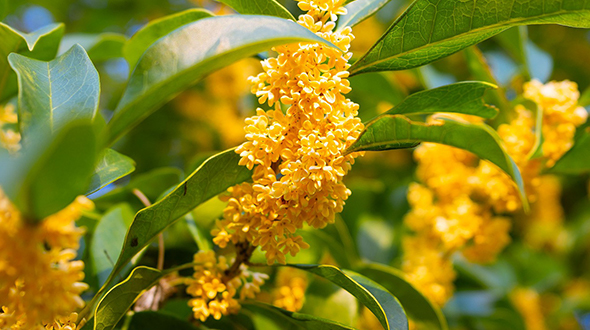
Flowering shrubs like tea olive are perfect for your marietta georgia yard

Tea olive is a broadleaf evergreen shrub (strikingly similar to hollies) from the Oleaceae (olive) family and is native to Asia. This plant species blooms extremely fragrant flowers.

Sun Requirements – Tea olive shrubs thrive in full sun (about 6 to 8 hours per day) or part shade.
Soil Requirements – This species requires well-drained, acidic soil.
Size at Maturity – This plant species typically grows to a mature height of 10 to 30 feet
Flowers – Tea olive blossoms appear in spring, continuously blooming heavily through early summer, then flowering intermittently through fall.

Blooming Shrubs

In this article, you discovered essential information about 5 magnificent flowering shrub species hardy to zone 7b.

Knowing which shrubs to plant in your Marietta, Georgia yard will help you grow a thriving yard full of beautiful seasonal flowers.

Haphazardly planting shrubs out of their respective zones will likely end in the species struggling to survive and prevent it from ever flowering.

Sources:
hgic.clemson.edu/factsheet/tea-olive/
njaes.rutgers.edu/fs1152/
site.extension.uga.edu/effinghamanr/2021/02/tips-for-growing-roses/
extension.umn.edu/trees-and-shrubs/forsythia
gardeningsolutions.ifas.ufl.edu/plants/trees-and-shrubs/shrubs/azalea.html

Todd’s Marietta Tree Services

200 Cobb Pkwy N Ste 428 Marietta, GA 30062
(678) 505-0266

Originally published on: http://www.toddsmariettatreeservices.com/5-flowering-shrubs-for-your-marietta-georgia-yard-zone-7b/

Friday, August 24, 2018

Azalea Planting and Care for Your Marietta Yard

Azaleas blooming in Marietta Ga yard

Azaleas are one of the most beautiful perennial shrubs you can have in your yard. They are also one of the most poisonous to people and their pets, yet they remain one of the South’s favorites to plant.

Planting azaleas in your Marietta Georgia yard will give a springtime color show with their signature blooms year after year. Closely related to rhododendrons, this easy to care for shrub is a slow grower but well worth the effort and wait.

The team at toddsmariettatreeservices.com collected the following planting, blooming, toxicology, and care information for those wanting to add azaleas to their yard or landscape.

Azalea Information

Azaleas are a member of the genus Rhododendron, which comprises well over 800 species and upwards of 10,000 named selections. Azaleas thrive in USDA Hardiness Zones 4 through 9 and are capable of reaching several feet in height and width depending on the species.

Rhododendrons and Azaleas – While the two belong to the same family (Ericaceae), it is not difficult to tell them apart. Azaleas have much smaller leaves and funnel-shaped blooms, while rhododendrons have bell-shaped flowers and much larger leaves.

Azalea rhododendron red blooms in Marietta Ga

Evergreen or Deciduous – Depending on the species, azaleas can be evergreen or deciduous shrubs. Those of the deciduous species will lose their foliage and begin dormancy in mid to late fall.

Spring Flowers – Azelias bloom in early spring and continue to do so through late spring. Varieties such as the encore azalea will bloom a second time, extending the blooming period into the summer.

Planting and Caring for Azaleas

Planted in the right location and given the proper care, azaleas will thrive and will provide onlookers with a springtime show of color year after year.

Yellow azalea blooms in Marietta Ga garden

Planting Season – In most areas, fall and spring are the best times to plant azaleas. In colder regions such as USDA Hardiness Zones 4 and 5, planting may occur in summertime. In warmer areas like zone 9, planting may even happen in the winter.

Planting Location – Azalea sun tolerance varies by species and selection. When planting azaleas, look for areas that are partly shaded, near hedges, under tree canopies, or the east and north side of a home or structure. Locations sheltered from heavy winds are best.

Soil Type and pH – Well-drained, humus-rich, moisture-retentive soil offers the ideal conditions for growth. Soil with heavy clay or sandy properties needs significant amounts of organic material, such as compost added to it to provide the same conditions.

Azaleas thrive in acidic soil. A pH level of 4.5 to 6.0 should be maintained to provide optimal health and growth conditions.

Azalea blooming purple flowers Marietta Ga yard

Planting Instructions – One of the keys to successfully growing azaleas is proper planting. The following will help you get it right:

  • Dig a hole 8 to 10 inches deep.
  • The hole should be three times as wide as the root ball.
  • Mix in copious amounts of organic material to the removed soil.
  • Add enough of the mixed soil back to the hole so that the top of the root ball is approximately 2” above ground level.
  • Replace and mound the amended soil in the hole until level with the edge of the root ball.

When planting in soil with high clay content, make the hole four to five times wider than the root ball and plant the azalea so that the top of the root ball is 3 to 4 inches above ground level.

When planting in sandy soil, the top of the root ball should be level with the surrounding land.

Watering Your Azaleas – After planting azaleas, water them thoroughly. For the first 18 months after planting, avoid frequent short watering. Deep watering at least once per week will keep the root ball from drying and allow for better root growth.

During late fall be sure to frequently deep water your azaleas and all other deciduous plants and trees. They handle the winter months and dormancy much better when well hydrated.

Azalea in winter Marietta Ga yard

Fertilizers – Early spring and early summer are the best times to apply organic fertilizers. Avoid the use of chemical fertilizers as azaleas are not as nutritionally needy as other plant species.

Do not fertilize after mid-summer. Doing this will encourage new growth, which will not have time to “harden” before the winter months.

Mulch – After deep watering a newly planted azalea, apply a 3-inch layer of porous organic mulch around the plant. Keep the mulch 2 to 3 inches from the stem to avoid rotting and decay.

Reapply mulch in late fall, maintaining the 3-inch depth, thus keeping the roots sheltered from the cold or freeze.

Pruning – For small or younger azaleas, tip pruning in mid to late spring will encourage thicker and more compact growth.

When pruning more mature azaleas, do not remove more than one-third of the foliage. Removal such as this will stress the plant and leave it vulnerable to infestation and disease. If heavy pruning is needed, do it in annual stages allowing the plant to recover between each stage.

As pruning activities encourage new growth, do not prune after mid-summer.

Toxicology of Azaleas

Like the rhododendron, azaleas are highly toxic. The leaves and nectar contain andromedotoxins which act to lower the blood pressure of the person or animal that consumed it.

Mad Honey – In parts of Turkey, bees are deliberately fed nectar from azaleas and rhododendrons to produce what is known as “mad honey” or “Deli Bal.” This occasionally lethal treat contains a naturally occurring neurotoxin called grayanotoxin which may result in blurred vision, numbness, nausea, fainting, seizures, and in rare cases, even death.

Azalea nectar grayanotoxin Marietta Georgia yard

Grayanotoxin Poisoning – If you suspect that a child (or adult) has consumed azalea leaves, stems, or flowers, seek immediate medical attention. Depending on the quantity consumed, symptoms such as respiratory distress, hypotension, bradycardia, constricted pupils, salivation and muscle twitching, or seizure may occur.

If your pets have consumed the leaves, stems, or flowers, seek veterinary assistance immediately. Symptoms from grayanotoxin poisoning include vomiting, depression, diarrhea, and anorexia.

If you suspect that your pet has consumed a poisonous plant or substance, you can call the ASPCA’s Animal Poison Control Center at (888) 426-4435 or visit https://www.aspca.org/pet-care/animal-poison-control

Insect Infestation and Illness

Insects and diseases tend to avoid vigorous plants. However, when azaleas are stressed, they may fall victim to lace bugs or Phytophthora.

Lace Bugs – We do not recommend the use of insecticides. They can kill off the lace bug’s predators leaving the plant defenseless against them. Insecticidal soaps or neem oil sprayed on the plant every two weeks is an effective measure in controlling this pest.

Phytophthora – This soil-borne fungus thrives in poorly drained soil and is very difficult to treat. Symptoms of Phytophthora fungus infection are:

  • Reduced growth.
  • Any new growth will appear smaller than usual.
  • Leaves will shrivel or droop.
  • The bark at the base will turn dark red or brown.

Protecting azaleas from this pathogen begins in the planting stage. Avoid planting in poorly drained soil and keep your plant healthy. Pathogens like this are less likely to affect healthy plants.

Once infected, your best course of action may be to remove the entire plant and the soil it grew in, destroying or disposing of both. Any attempts to prune affected regions of the plant may serve only to propagate the spread of the pathogen to other plants.

Before replanting in that location, it should be treated with a fungicide and verified that other plants in the same area are not afflicted. Remember that this is a fast-moving root fungus that thrives in poorly drained soil. Adding organic material to the soil before any planting will help protect the roots of your plants.

Azalea Care for A Beautiful Marietta Georgia Landscape

Azaleas can be a gorgeous addition to any landscape. However, before planting them, it is vital to know not only what you are planting, but also how to plant it and care for it.

Azalea with orange blooms in Marietta Georgia

In this article, we’ve discussed how to properly plant and water azaleas, as well as how to choose the right location for them. You’ve learned about their toxicology and how the consumption of the plant by animals or children may lead to serious health problems up to and including potential death. Finally, we’ve presented how to treat and contain instances of infestation and illness.

Without the proper planting and care, your azaleas will struggle to reach maturity and become susceptible to infestation and disease. By following the above guidance during and after planting, your plant will respond with robust growth and beautiful blooms in the spring.

Sources:
https://www.azaleas.org/wp-content/uploads/attachments/Azalea_Care_Flier.pdf
https://www.ncbi.nlm.nih.gov/pmc/articles/PMC3404272/
https://en.wikipedia.org/wiki/Azalea

https://plus.google.com/+Toddsmariettatreeservices

Todd’s Marietta Tree Services

200 Cobb Pkwy N Ste 428 Marietta, GA 30062
(678) 505-0266

Originally published on: http://www.toddsmariettatreeservices.com/azalea-planting-care-your-marietta-yard/

Tuesday, December 6, 2016

5 Popular Marietta Ga Shrub Species

There is an infinite list of shrub species to choose from. The 5 amazing shrub plants chosen for this article stood out as being relatively low maintenance, as well as visually striking. Shrubbery is outstanding for slowing natural soil erosion, even augmenting curb appeal! How cool is that?!

Marietta Tree Experts Talking Shrubbery


Choosing the right shrubs and trees for your Marietta yard conditions is critical to creating a stunning landscape. Listed below are some beautiful and easy to maintain shrub plants. See their photos, read the pertinent care information, and choose what sounds most desirable for your Marietta Ga backyard.

Hydrangea - Known for its blooms which appear to be pom-poms left behind by a group of cheerleaders, the Hydrangea is a much sought after shrub for its sturdiness as well as its beauty. The Hydrangea remains in bloom from early spring to late autumn - while other shrubs and trees have already lost their leaves and luster.

This shrub sports flowers in colors including white, blue, pink lavender and rose - sometimes all on the same shrub! This factor relies on the pH of the soil, aluminum ions become more or less accessible as the pH changes. This can alter the color of the flowers in some of the species. Interestingly, those bearing white flowers are not affected by the pH level in the soil.


Winter Honeysuckle - Known as the “harbinger of spring”, the Winter Honeysuckle is a robust low maintenance shrub reaching heights of 4 - 6 feet. While not the most attractive of shrubs, it is among the first to bloom at the end of the winter season. The scent produced by its blooms can be carried hundreds of feet and are succulent in nature. The Winter Honeysuckle can begin a blooming spree that starts before the end of winter lasting throughout spring, not to mention that the leaves remain green throughout the year. The Winter Honeysuckle is a true garden favorite.

Aucuba - Commonly known as the spotted laurel or gold dust plant, Aucuba is an evergreen shrub that grows 6 to 10 feet tall with colorful, green and yellow-gold leaves reaching lengths up to 8 inches long. While the flowers aren’t particularly ornamental, the Aucuba is valued for its ability to thrive in the most difficult of garden environments. It also copes well with pollution and salt-laden coastal winds - not that coastal winds would be an issue for Marietta Georgia gardens.

Attractive, bright red berries replace its flowers in the fall if a male plant grows nearby. The flowers and fruit will often hide behind the foliage. Aucuba also makes nice container shrubs or houseplants, with the ability to quickly adapt to an indoor setting.

Florida Anise - Also known as Star Anise (due to the star-like shape of its fruit), the Florida Anise is an evergreen shrub reaching heights of 10 - 12 feet tall and 6 - 8 feet wide. This beauty of a shrub is best-suited for shade, at the most, morning sun. Thriving in a rich, organic soil which remains uniformly moist, once established, plants are said to have great drought resistance.

How can you not fall in love with shrubbery that has a built-in self defense system? Due to the poisonous aromatic compounds in the foliage, Florida anise makes itself resistant to insect feeding and animal browse. Literally saying: “Leave my Leaves Alone!”

Rhododendron - A well desired shrub able to reach heights of 15 feet or more, the Rhododendron flowers will bloom from late winter to early summer. This shrub is shade tolerant and attracts hummingbirds making it that much more desirable. Let’s face it, the life attracted to (or repelled by) the species chosen is as fundamental as its appearance.

Being the national flower of Nepal makes it a fun conversation piece as well... Well, sort of.


Popular Shrubs for Marietta Landscaping


Make your yard a destination point! Listen for the ‘ooohs’ and ‘aaahs’ at the beauty you and our Marietta tree professionals have assembled. Enjoying the beauty of a well planned yard, the life it attracts and the value it gives are some of the many rewards for years to come.

Check out our tree care blog for other related topics.

https://plus.google.com/+Toddsmariettatreeservices/about
Todd’s Marietta Tree Services
200 Cobb Pkwy N Ste 428 Marietta,GA 30062
(678) 505-0266

Originally published on: http://www.toddsmariettatreeservices.com/5-popular-marietta-ga-shrub-species/