Showing posts with label Heart Rot. Show all posts

Tuesday, August 27, 2019

Mushrooms on a Tree Trunk Means Your Tree is Dying

Mushrooms growing on tree trunks from heart rot and root rot

Do you have mushroom conks growing out of your tree trunk? Don’t mistake these fungi as a regular thing, they are a grim sign that your tree is dying or already dead.

toddsmariettatreeservices.com gathered information on why mushrooms grow on tree trunks and the immense danger they represent.

Mushrooms Growing on a Tree

Mushrooms are a common sight in fertile garden soil, healthy landscapes, on outdoor woodpiles, and fallen trees. This may contribute to the misplaced sense of normalcy when you see them growing on tree trunks or root flares.

You should be alarmed when you see mushroom conks on a tree:

• Mushroom conks are the reproductive part of fungi.
• Fungi require rotting organic material to thrive.
• When mushroom conks grow on the trunk of a tree, it is a sign of rot within the tree.
• When mushrooms grow from a tree’s root flare or on surface roots, it is a sign of root rot.

Mushrooms growing on tree root flare indicate root rot

By the time mushroom conks appear on a tree trunk or root flare, the responsible fungus has already caused severe damage to the host tree.

Signs of a Fungal Tree Disease

Your tree may be succumbing to a fungal disease without the immediate appearance of mushroom conks. The following signs of disease may precede the presence of these reproductive bodies:

• Dieback occurring on one side or throughout the crown.
• Early leaf drop.
• Stunted leaf growth
• Severe wilting or drooping of the tree’s foliage.
• Chlorosis (leaves lose their vibrant green color) of the tree’s foliage.
• Branches and twigs die and become brittle.
• Cankers appear on branches and the trunk.
• The tree may begin to lean.
• Carpenter ants nesting in the trunk or limbs.
• Boring insects successfully attacking and infesting the tree.

Wilted tree foliage indicating severe fungal infection

If one or a combination of these symptoms are present in your tree, hire an arborist to evaluate the tree and recommend a course of action.

Tree Fungus Types and Identification

Many types of fungi grow on trees. Some of those fungi are harmless to a mature tree, while others signal certain decline and eventual death. Take the following fungi, for example:

Lichens – A lichen is a symbiotic relationship between algae and a fungus, and poses little to no threat to a tree. Lichens come in many shapes, sizes, and colors but appear most commonly as a low, flat, crusty, greenish substance branching out like a doily.
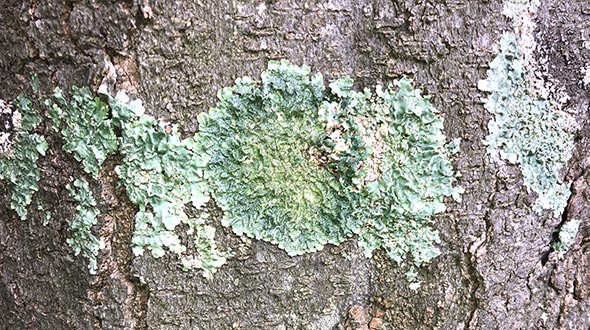
Lichens growing on tree trunk exterior

Lichens do not penetrate tree bark; they attach themselves and spread along the surface. This organism may grow on trees, cement pathways, park benches, brick structures, windows, etc.

Powdery mildew – This fungal disease affects the foliage of various trees and plants. Powdery mildew diseases can be caused by many different fungal species from the order Erysiphales. These fungi appears as a white powdery covering of foliage and stems. It is rarely fatal to mature trees unless widespread infection weakens the tree, allowing subsequent infections and insect infestations.

Powdery mildew growing on tree leaves

Polyporus Alveolaris – This is a species of fungus in the genus Polyporus, and poses a significant risk to trees. It causes white rot in dead and decaying hardwoods. Commonly growing on decaying logs and rotting trees, conks of this species have a yellowish to orange scaly cap and hexagonal or diamond-shaped pores. This species of fungus is widespread across North America.

Ganoderma Applanatum – Rot caused by this fungus may take several years to kill a tree but makes the tree very susceptible to secondary infections, infestations, and wind-throw. The shelf-like fruiting structure forms at or near the soil line. It appears brown to reddish-brown on top with a white-colored margin. The underside of the shelf contains millions of pores in which spores are formed.

Mushrooms on tree trunks ganoderma applanatum fruiting structure

Ganoderma Lucidum – This species causes root rot and forms a shelf-like structure on the wood similar to that of Ganoderma Applanatum. Fruiting structures occur singly or in clusters and have a varnished appearance.

Armillaria – Fungi from this genus cause Armillaria root rot on many species of conifers and hardwoods. The mushroom is a fleshy, firm, honey-colored conk growing in clusters of up to 100 or more. The cap of the mushroom can reach from 1.5 to 6 inches in diameter with a depressed center.

Mushrooms on tree trunks armillaria mellea

Laetiporus Sulfureus – Signs of this fungus include massive clusters of bright, yellow to salmon or bright orange shelf-like conks that turn white with and fall off as they age. The underside of the conk has millions of pores in which spores are formed. These conks appear long after the damage has occurred. Infected trees are prone to wind breakage long before the fungus forms its fruiting structures and should be removed when an infection is confirmed.

Laetiporus sulphureus mushrooms on dying tree trunk

How a Tree Fungus Spreads

Fungi are spread easily from tree to tree by the following means:

Spores – Millions of spores can be produced and released by a single fruiting structure or conk. These spores can be spread by:

• Wind
• Splashing Water
• Rain

Mushroom fruiting structure and spores on tree trunks

Human Activity – Handling diseased plants and trees with gardening tools and pruning equipment, then using those “infected” tools on healthy plants and trees.

Tree Fungus Treatment

The most recommended method of treatment for trees against fungal infections is prevention. By promoting the healthy growth and proper seasonal pruning of your trees, they can resist infections and infestations that can lead to disease.

However, once a fungus infects a tree, the tree cannot be fully cured. Treatments that stop the progression of the disease, allowing the tree to compartmentalize it, can be applied to restore your tree’s health.

Steps you can take to prevent fungal infections include:

• Ensuring proper drainage of the soil around your trees.
• Avoid overwatering your trees.
• Mulch your trees to maintain optimal levels of moisture and ground temperature.
• Apply fungicides like neem oil to tree bark and surface roots.
• Sanitize pruning and gardening tools between trees.
• Fertilize your trees in late winter or early spring as they enter the growing season.
• Have your trees and landscape inspected annually by an arborist.

Sanitized pruning equipment to avoid disease contamination

To avoid widespread infections or catastrophic tree falls, have your trees inspected at the first sign of trouble. The earlier you address fungal infections, the easier it is to treat them.

Tree Fungi and Conks on Trees

When mushroom conks grow on your tree trunk or root flare, there is a grave problem within your tree that must be addressed. Otherwise, a potentially catastrophic tree fall may occur.

In this article, you discovered the signs of fungal tree diseases, types, and identification of fungi, how they propagate and spread, and how to treat them.

Your slow reaction to the signs of fungal infections on your tree may result in the loss of the tree. The tree may eventually fall on your vehicle, home, or causing severe physical injury to people.

Sources:
extension.psu.edu/tree-diseases-that-create-hazards
ipm.ucanr.edu/PMG/PESTNOTES/pn74109.html

Todd’s Marietta Tree Services

200 Cobb Pkwy N Ste 428 Marietta, GA 30062
(678) 505-0266

Originally published on: http://www.toddsmariettatreeservices.com/mushrooms-on-trunk-means-your-tree-dying/

Monday, July 22, 2019

Reasons Your Tree Changing Colors in Spring or Summer is a Bad Sign

Distressed tree changing colors and dying

Is your tree changing color when it should be green? Tree foliage will change color for several reasons. Some of those reasons may lead to the death of the tree, while others are merely seasonal.

toddsmariettatreeservices.com gathered information on why trees change color, and when a color change signals severe problems with trees.

Deciduous vs. Evergreen Trees

In a very general sense, trees may be classified in one of two categories; deciduous or evergreen. When their foliage changes color, it can be interpreted as:

Deciduous Trees – A deciduous tree keeps its green color throughout spring and summer. During autumn, its leaves will change from green to vibrant yellow, orange, red, or purple before falling to the ground.

This color change occurs as the days shorten and temperatures drop. As the leaves cease their food making process, the chlorophyll breaks down, the green color fades away, and so begins the fall color change and leaf drop spectacle.

Leaf color change on deciduous trees in fall

This process also enables the tree to conserve energy as it prepares to enter dormancy throughout late autumn and winter.

Evergreen Trees – As the name suggests, these trees remain green throughout the year. Typically, they will drop small amounts of foliage as new growth takes its place during the spring and summer months.

While healthy evergreen trees slow down considerably during autumn and winter months, they retain their foliage and green color.

Diseased, Infested, and Dying Trees

When a deciduous tree changes color during spring or summer months, or an evergreen changes color at any time, there is cause for concern. One or a combination of the following may be causing the tree to decline in health or die:

Drought – Drought conditions can happen any time throughout the year, and trees viscerally respond to hydraulic failure.

When there is a lack of water within a tree, the entire crown may be affected in the following ways:

• Chlorosis (loss of color) of the foliage
• Wilting
• Premature leaf drop
• Hardening of branches and twigs
• Self-pruning (shedding of entire branches)

If a regular water supply is not restored to the tree at the onset of drought symptoms, the tree will likely die.

Solution: Maintain a watering pattern throughout the year, increasing the frequency during dry stretches and decreasing during rainy seasons.

Root Rot – Excess water may deprive tree roots of getting the air that they need, leading to decay. To avoid root rot, it is best to only water trees when the soil becomes dry, and to plant the tree in well-drained soil.

Symptoms of root rot are very similar to those of drought, including chlorosis, and premature leaf drop, as both ailments cause hydraulic failure within the tree.

Tree leaf chlorosis and death from disease stress

One of the significant differences between drought and root rot is the destabilization of a tree affected by root rot. Without firm roots to anchor the tree, the lightest of storm activity may cause it to topple.

Solution: Avoid overwatering trees and plants located in poorly drained soil. If root rot has already occurred, contact a tree service professional to evaluate the situation and recommend a course of action.

Heart Rot – Trees are susceptible to heart-rotting fungi that produce a lightweight, soft, spongy, stringy, or powdery heart decay. Signs that a tree is rotting from the inside are:

• Leaf chlorosis
• Wilting
• Premature leaf drop
• Dead and brittle branches
• Mushroom conks growing from the trunk
• Bark abnormalities (swelling, deep cracks, or holes)

While trees are very good at compartmentalizing (isolating) damaged or diseased portions of themselves, some fungi can cause massive amounts of potentially fatal damage before the tree can react.

Solution: The following will help a tree avoid heart rot:

• Promote the tree’s health (watering, pruning, fertilizing, mulching)
• Prune in late fall or early winter
• Avoid bark damage
• Remove storm-damaged branches

Trees with symptoms of heart rot should be evaluated and treated or removed by a tree service professional, as soon as possible to avoid severe damages should the tree topple or collapse.

If your tree is dying, learn more about what you can do at toddsmariettatreeservices.com/my-tree-is-dying-what-do-i-do/

Anthracnose – Anthracnose can attack a tree (fruit trees are more susceptible) at any stage of its growth and can affect leaves, stems, pods, fruits, and roots. The symptoms of anthracnose are:

• Small irregular yellow, brown, or black spots that expand and merge together on foliage. Severe infections can affect entire portions of the crown.
• Cankers on stems and branches that cause extreme defoliation and rotting of fruit and roots.
• Fruits develop sunken circular spots that darken with age, eventually producing gelatinous pink spore masses.

Signs and symptoms of anthracnose tree disease

Solution: The following can help prevent an anthracnose infection:

• Promote your tree’s health (watering, pruning, fertilizing, mulching)
• Transplant only healthy seedlings
• Remove and destroy infected tree parts
• Harvest unripe but mature fruits
• Plants species that are resistant to anthracnose disease
• Keep the landscape free of weeds

If your tree has become severely infected with anthracnose, the best containment of the disease may be the complete removal and destruction of the tree. Hire a tree service professional to evaluate the tree’s situation, and risk to surrounding vegetation before deciding on a course of action.

You can learn more about tree diseases and treatment at toddsmariettatreeservices.com/5-marietta-ga-tree-diseases-identification-treatment/

Insect Infestation – Severe infestations by honeydew-producing aphids, leaf-consuming caterpillars, trunk burrowing beetles, and other opportunistic insects can lead to a tree being overstressed and dying. Symptoms of an insect infestation may include:

• Chlorosis of the foliage of a portion of or the entire crown
• Wilting and leaf drop
• Damaged or eaten foliage
• The appearance of sooty mold on infested foliage
• The presence of ants (colonizing and tending to aphids)
• Severe premature leaf drop
• Burrowed circular holes in branch or trunk bark

Tree leaf damage from insect infestation

Solution: Upon detection of an insect infestation, the infected and surrounding trees should be treated and protected with:

• Insect traps (tree bands, ant traps, beetle traps, etc.)
• Neem oil spray
• Insecticide

In cases where beetles and other burrowing insects are involved, a tree service professional should be contracted to survey the tree, property, and surrounding landscape to attempt to gain full control over the infestation.

Climbing Vines – If left uncontrolled, climbing vines are capable of ascending to the top of a tree and spreading across its crown. As the vine spreads its foliage, it absorbs the sunlight otherwise intended for the tree, leading to the following:

• Leaf chlorosis
• Wilting
• Premature leaf drop
• Nutrient deficiency (weakened health)

Climbing vines can girdle and kill trees

When vines take over the canopy of a tree, you may see green, healthy foliage (from the vine) mixed with wilting or dying foliage (from the tree). As the tree weakens, it will become susceptible to insect infestation and disease, compounding its health decline and hastening its death.

Solution: Sever the vine from its root system near the ground and let it die off. However, don’t try to remove the vine from the tree. As the vine was climbing, it anchored to the tree’s bark, any attempt to pull the vine down may severely damage the bark, resulting in the girdling of the tree.

To learn more on how to save your tree from clinging vines, read toddsmariettatreeservices.com/saving-trees-clinging-vines/

Trees Changing Colors

Is your tree turning yellow or brown when it’s supposed to be green? There are several reasons that trees will change color, and many of those reasons may indicate serious problems that can kill the tree.

In this article, you discovered why trees change color in the fall, and problems that may lead them to change color and suffer leaf drop in the spring or summer months.

While it is normal for deciduous trees to change color in the fall, ignoring an off-season color change or leaf drop can lead to the death of your tree.

Sources:
https://www.esf.edu/pubprog/brochure/leaves/leaves.htm
https://hort.extension.wisc.edu/articles/chlorosis/
http://www.oisat.org/pests/diseases/fungal/anthracnose.html
https://www.canr.msu.edu/news/be_careful_where_you_spray_that_stuff

Todd’s Marietta Tree Services

200 Cobb Pkwy N Ste 428 Marietta, GA 30062
(678) 505-0266

Originally published on: http://www.toddsmariettatreeservices.com/reasons-tree-changing-colors-spring-summer-bad-sign/

Wednesday, December 26, 2018

5 Marietta Ga Tree Diseases – Identification and Treatment

Fallen diseased tree Marietta Ga

That concerning tree in your yard may be diseased and risky to leave unaddressed. However, inaction is what often leads to severe and avoidable damage.

While diseased trees can pose a threat to your landscape, property, and surrounding people, identifying and treating such cases properly can mitigate and prevent disastrous tree fall situations.

toddsmariettatreeservices.com names five common tree diseases in Marietta GA, how to identify, treat, and when to have the tree evaluated by a professional.

Fire Blight Symptoms and Treatment

Fire blight is a disease that flourishes in humid, rainy weather when the average temperature rises to 60 degrees Fahrenheit and above.

Symptoms – As the name implies, symptoms of this disease cause the appearance of fire scorching or burning. When inspecting your tree, look for these signs:

• Infected flowers turn black and die.
• Twigs and stems turn black and curl over.
• Branches appear scorched as their leaves turn black and shrivel up.
• Cankers will appear on branches and the trunk.

Transmission – Fire blight is easily transmitted to other trees, shrubs, and plants by birds, animals, splashing water, and unsterile gardening tools.

Fire blight tree disease transmission in Marietta Ga

Treatment – The following measures should be taken immediately to eliminate and prevent the spread of fire blight:

• Apply a copper fungicide before the flowering season.
• Extensive pruning of all affected areas.
• Take pest control measures to eliminate ants and other insects which may transmit the disease.
• Convert your watering method to drip lines. (Avoid sprinklers or spraying)
• Sanitize gardening equipment with a water and bleach solution after use on infected landscapes.

Call a Professional – When more than 25% of a tree must be removed, seek the advice of a professional tree service or arborist. It may be necessary to remove the tree altogether. Likewise, when multiple trees, shrubs, and plants are infected, a professional can help you devise a plan to halt the disease.

Powdery Mildew Symptoms and Treatment

Much like fire blight, powdery mildew thrives in the springtime when temperatures range from 60 to 80 degrees Fahrenheit. There are several fungi which can produce powdery mildew.

Symptoms – As the name suggests, powdery mildew can appear on any part of its host and resembles white or slightly off-white mildew. Numerous spores begin to emerge as the fungi mature.

Transmission – Insects such as aphids are the principal means of transmission. However, when spores are released, splashing water or wind may spread the fungi.

Powdery mildew tree disease transmission in Marietta Georgia

Treatment – The following measures will help you control and eliminate powdery mildew from your landscape:

• Apply non-chemical organic fungicides such as milk, bicarbonates, and oil. An effective solution is diluted at 1 part fungicide to 10 parts water. This fungicidal mix produces outstanding results when used for preventative measures or sprayed directly on the infected plant.
• Applying a neem oil solution disrupts the fungus’ metabolism – preventing spore production.

Call a Professional – When topical treatment can’t stop powdery mildew, or when it eliminates powdery mildew, but your tree’s health continues to decline, there may be another pathogen or insect at work. Request an inspection and evaluation from a tree care professional.

Anthracnose Symptoms and Treatment

Anthracnose thrives in the springtime with prolonged periods of rainfall and when temperatures are consistently mild.

Symptoms – The symptoms of anthracnose include the following:

• Bud and twig death
• Dead spots on leaves
• Dead tissue or blotches along and between leaf veins
• Unseasonal or premature leaf-drop
• Lesions known as cankers in tree bark (open wounds)
• Dark colored pimple-like fruiting structures (acervuli) on the underside of leaves.

Anthracnose disease infected tree in Marietta Ga

Transmission – Similar to fire blight, anthracnose is easily transmitted to other trees, shrubs, and plants by wildlife, splashing water, rain, and unsterile gardening tools.

Anthracnose fungi (there are several fungi which can cause anthracnose) can survive the winter months in fallen leaves, or in cankers formed in the bark of branches or the trunk.

Treatment – The following measures should be taken immediately to eliminate and prevent the spread of anthracnose:

• Extensive pruning of all affected parts.
• Utilize a fire pit or bonfire to destroy affected clippings and foliage.
• Convert your watering systems to drip lines. (Avoid sprinklers or spraying)
• Sanitize gardening equipment with a water and bleach solution after use on infected landscapes.

Read the following article for more on How to Identify, Treat, and Prevent Anthracnose.

Call a Professional – When 25% or more of a tree must be removed, seek the advice and assistance of an arborist or reputable tree service.

It may be necessary to remove the tree altogether. Without treating anthracnose, you will be leaving your tree susceptible to other infections and infestations.

Root Rot Symptoms and Treatment

Changes in landscaping, soil compaction, soil composition, or persistent rains may cause root rot.

Symptoms – Severe and fast branch die-back, premature color change of the leaves, widespread leaf spots, sap coming from the bark, and mushrooms around the root flare may all indicate root rot.

Transmission – Root rot is typically the result of poor drainage or changes in the soil composition and texture. This either kills the roots or allows access to pathogens, which weakens and eventually kills them.

Treatment – If your tree is diagnosed with root rot, the recommended treatment is to have the tree removed.

Diseased tree dying from root rot in Marietta Georgia

To prevent further cases of root rot, ensure that the soil in your landscape is well-drained, and that roots are protected from soil compaction.

Call a Professional – If you suspect that a tree is suffering and dying from root rot, call a professional to have the tree evaluated immediately. Depending on the size of the tree and the amount of damage to the roots, the tree may fall at any time.

Heart Rot Symptoms and Treatment

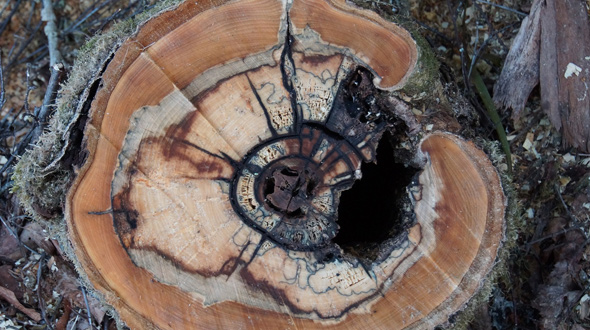
When a fungal disease causes the softening and decay of the wood found at the center of a tree’s trunk and branches, this is known as heart rot.

The softening of the heartwood leaves a tree vulnerable to the pressure of its own weight and prone to collapse.

Symptoms – A reliable indicator that heart rot is present within a tree is the presence of fungus conks or mushrooms growing from the tree’s trunk or branches.

Transmission – Heart rot is able to attack the heartwood of a tree through damaged bark or improper pruning.

Tree dying from heart rot disease in Marietta Ga

Treatment – Control of heart rot is achieved by:

• Maintaining your trees healthy and vigorous.
• Using proper pruning techniques.
• Having the trees inspected by an arborist annually.
• Providing post-storm care and maintenance.

Heart rot affects trees across the world. When trees are healthy, they are able to isolate and stop this disease through a process called compartmentalization.

Call a Professional – If you suspect that your tree is suffering from heart rot, do not hesitate to call a professional tree service to evaluate the tree and recommend a course of action. Act promptly, as trees that suffer from this disease can cause catastrophic damages when they collapse unexpectedly.

Tree Disease and Landscape Health

Because diseased trees are susceptible to fall at any time, it is imperative to be educated and swift in taking action to treat these disease cases.

Discovering how to identify and treat the diseases that are common in Marietta Georgia is a great start.

Being informed and giving more attention to your trees may seem like extra effort, but sleeping well at night knowing your property and people are safe is worth the energy.

Sources:
http://extension.uga.edu/publications/detail.html?number=B1238&title=Common%20Landscape%20Diseases%20in%20Georgia
http://www.gfc.state.ga.us/community-forests/management/tree-care/insects-and-diseases/index.cfm

https://plus.google.com/+Toddsmariettatreeservices

Todd’s Marietta Tree Services

200 Cobb Pkwy N Ste 428 Marietta, GA 30062
(678) 505-0266

Originally published on: http://www.toddsmariettatreeservices.com/5-marietta-ga-tree-diseases-identification-treatment/